
Financial Accounting vs Management Accounting: What Is the Difference?
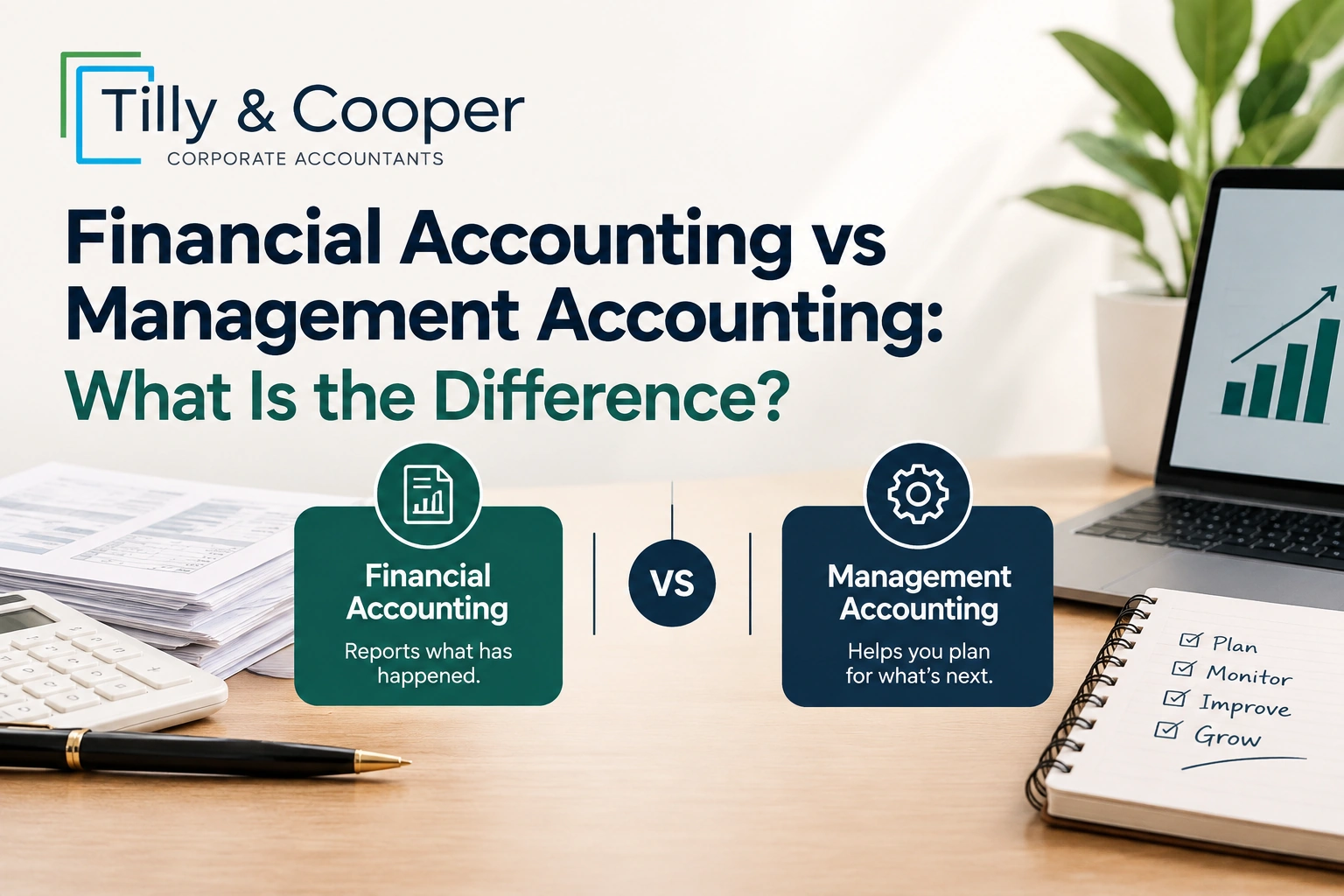
Financial accounting reports financial performance, while management accounting supports internal planning and business decisions. Both systems use financial data, but they serve different purposes. Financial accounting mainly records and reports completed business activity. It helps explain revenue, expenses, assets, liabilities, and profit during a reporting period. Management accounting uses financial and operational data to support current and future decisions. It can include budgets, forecasts, KPIs, and variance analysis.
The difference between financial and management accounting becomes clearer when comparing users, timing, reports, and reporting requirements. UK limited companies prepare statutory annual accounts for formal reporting. Management accounts are usually prepared internally when directors need regular financial insight. Financial accounting vs management accounting is therefore not a choice between two competing systems. Each answers different business questions.
What Is Financial Accounting?

Financial accounting records, classifies, and reports financial transactions to show a business’s financial performance and position. It mainly focuses on completed reporting periods. Financial accounting uses information from sales, purchases, payroll, bank transactions, assets, liabilities, and other business records. These records support the preparation of financial statements. Common statements include a balance sheet and profit and loss account. For UK limited companies, financial records also support statutory accounts preparation at the end of each financial year. Statutory accounts provide a structured view of the company’s financial position and performance.
They follow applicable accounting and company reporting requirements. A balance sheet shows what the company owns and owes at a specific date. It also shows amounts owed to the company. A profit and loss account records income, business costs, and the resulting profit or loss for the period. Statutory accounts normally contain supporting notes. Other reports can apply depending on the company’s size and circumstances. UK limited companies must file annual accounts with Companies House.
This requirement also applies to dormant companies. Financial accounting therefore supports both financial reporting and statutory compliance. Directors can also use financial accounts to review profitability, assets, liabilities, and retained earnings. However, year-end accounts mainly explain completed financial activity. They may not provide enough detail for decisions arising during the year. This timing difference separates financial accounting from management accounting. Financial accounting mainly explains financial outcomes. Management accounting analyses those outcomes to support business decisions.
What Is Management Accounting?
Management accounting turns financial and operational data into information for planning, control, and internal decision-making. It focuses on business needs rather than public filing. Management accounts can include monthly profit and loss reports, balance sheets, budgets, and cash flow forecasts. They can also contain KPI reports, departmental results, margin analysis, and variance analysis. Businesses that need regular financial reporting can use Tilly & Cooper’s management accounts service to monitor performance throughout the year.
Management accounting can combine financial figures with non-financial KPIs. Examples include sales volume, customer numbers, staff utilisation, units produced, conversion rates, and order volumes. This combination gives managers a wider view of business performance. For example, a fall in profit margin gives one financial signal. Falling sales volume can help explain why the margin changed. The format of management accounts depends on the business. A retailer might monitor gross margin, stock levels, average order value, and store performance.
A service business might focus on payroll costs, staff utilisation, debtor days, recurring revenue, and project profitability. Management accounting can combine historical figures with forward-looking information. Actual sales can appear beside budgeted sales. Current cash balances can appear beside a 13-week cash flow forecast. A variance report can compare planned spending against actual costs. This information helps directors identify trends and investigate differences earlier.
Management accounts do not normally follow one fixed statutory format. Directors choose the reports that support their decisions. A growing company may prepare monthly management accounts. A smaller stable business may prefer quarterly reporting. A business facing short-term cash pressure may review selected information every week. Management accounting therefore works as a decision-support system. It helps management plan resources, monitor performance, and control financial risk.
Financial Accounting vs Management Accounting: Key Differences
The main differences involve purpose, users, timing, reporting rules, frequency, and level of detail. Financial accounting supports formal reporting. Management accounting supports internal decisions.
| Area | Financial Accounting | Management Accounting |
| Main purpose | Reports financial performance and position | Supports planning, control and decisions |
| Main users | Shareholders, directors and external stakeholders | Directors, managers and internal teams |
| Time focus | Mainly historical | Historical, current and forward-looking |
| Reporting frequency | Linked to formal reporting periods | Monthly, quarterly, weekly or as required |
| Reporting rules | Follows applicable accounting and company requirements | Format depends mainly on internal needs |
| Common outputs | Balance sheet, profit and loss account, notes | Budgets, forecasts, KPI reports and variance analysis |
| Level of detail | Usually provides a structured company-wide view | Can analyse products, departments, branches or projects |
| Companies House filing | Annual statutory accounts require filing | Management accounts are not normally filed |
The two systems can start with the same accounting records. They then use those records for different purposes. Consider a £10,000 sale. Financial accounting records that £10,000 sale within the correct reporting period. Management accounting can analyse the same £10,000 against its budget, margin, salesperson, customer, and expected payment date. The transaction stays the same. The questions asked about the transaction change.
A wider business example makes this distinction clearer. Consider a UK company that records £600,000 of annual revenue and £90,000 of profit. Its annual financial statements show the overall result for that reporting period. Management accounts might show that £55,000 of profit arose during the first six months. They could then show falling margins during the following six months.
A cash flow forecast could identify whether that decline might create future working capital pressure. Financial accounting therefore shows the financial outcome. Management accounting helps directors understand how that outcome developed and what it could mean next. This relationship explains the core difference between financial and management accounting.
Who Uses Financial Accounting Information?
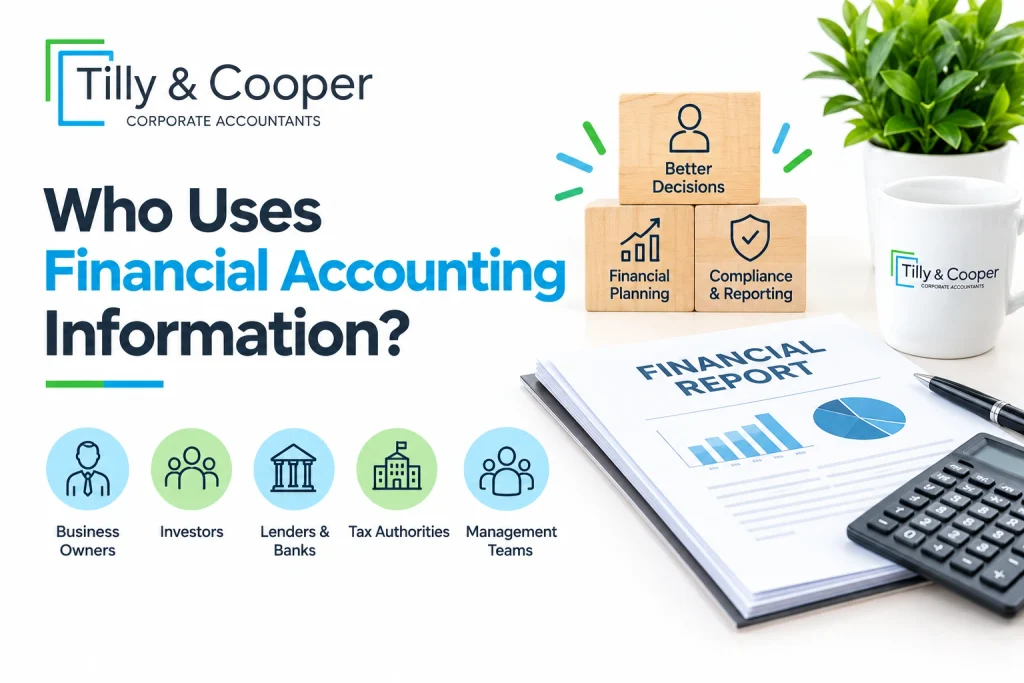
Financial accounting serves directors, shareholders, and external users who need structured financial information about a business.
Shareholders can use annual accounts to understand profit, assets, liabilities, and the company’s financial position. Directors also use these statements when reviewing year-end performance and meeting statutory responsibilities. Companies House receives annual statutory accounts from UK limited companies. HMRC receives company accounts with the Company Tax Return where required.
Lenders can request financial statements before providing finance or reviewing existing borrowing. Investors can examine historical profitability, debt levels, assets, and financial trends. Suppliers sometimes review financial information before granting substantial credit terms. Potential buyers can inspect financial statements during business due diligence. Each user looks at the information for a different reason.
Companies House uses statutory accounts within the company reporting framework. HMRC uses accounting information for Corporation Tax administration. A lender may focus more closely on debt, profit, cash generation, and repayment capacity. This need for external understanding makes structured financial reporting important. For businesses requiring help with year-end reporting, Tilly & Cooper’s statutory accounts preparation service covers the preparation and filing of company accounts.
Who Uses Management Accounting Information?
Management accounting mainly serves directors, managers and other internal decision-makers. They use it to monitor performance and guide future actions. A managing director may review revenue, gross profit, overheads, and cash flow. A sales manager might compare actual sales with monthly targets. An operations manager may monitor labour costs, productivity, output, and resource use. Finance teams can compare actual results against budgets and forecasts. They can then investigate significant differences through variance analysis.
Department managers can receive reports limited to their own cost centres. Project managers can monitor revenue, direct costs, labour hours, and project profitability. Management reports can therefore match the responsibilities of each user. This flexibility gives management accounting much of its practical value. Consider a director deciding whether to recruit another employee.
Last year’s statutory accounts show historical payroll costs and financial performance. They do not show every factor affecting the new recruitment decision. Management information can add current payroll costs, forecast revenue, available cash, and expected employee costs. The director can then assess the decision using more recent information. Management accounting therefore converts business records into information that supports action.
What Reports Are Used in Each Type of Accounting?
Financial accounting uses structured financial statements, while management accounting uses tailored reports for internal analysis.
Some reports can appear in both systems. A balance sheet shows assets, liabilities, and equity at a particular date. A profit and loss account shows revenue, expenses, and profit or loss for a reporting period. These statements form core parts of financial reporting. Statutory accounts can also contain explanatory notes and other required reports. Management accounts can use the same balance sheet and profit and loss structure.
However, management reports usually provide greater detail and more frequent comparisons. A monthly profit and loss report can compare actual results with budgeted figures. It can also compare the current month with earlier months or the same period last year. A cash flow forecast estimates future receipts and payments. It helps directors identify possible cash shortages before they affect normal operations.
A budget sets expected revenue, costs, profit, or other financial targets. Variance analysis compares those expectations with actual results. For example, a business may budget £30,000 for monthly payroll. If actual payroll reaches £34,000, the report shows a £4,000 adverse cost variance. Management can then investigate the reason for the difference.
KPI reports focus on selected performance measures. Financial KPIs can include gross profit margin, debtor days, and operating costs. Non-financial KPIs can include customer retention, sales volume, staff utilisation, and production output. A useful management reporting pack does not need every available measure. It needs information that connects directly with the decisions management currently faces.
Does a Small Business Need Both?
A UK limited company normally needs statutory annual accounts, while management accounts depend on its internal reporting needs. Statutory financial reporting forms part of the company’s annual compliance obligations. Management accounts do not normally form part of the annual Companies House filing requirement. A small business can therefore operate without preparing a formal monthly management reporting pack. However, management accounts become more useful as financial decisions become more complex.
Growth, recruitment, borrowing, stock investment, new premises, and cash pressure can increase the need for current information. Consider a small company with stable monthly revenue and relatively few transactions. Quarterly management accounts may provide enough information for its directors. A rapidly growing company may need monthly accounts instead. Its directors may require regular cash forecasts, margin analysis, and budget comparisons. A business with tight cash flow can require even more frequent monitoring. Profit and cash flow should not be treated as the same measure.
Profit measures financial performance, while cash flow tracks when money enters and leaves the business. A company can report a profit while waiting several months for customers to pay invoices. That delay can create cash pressure despite positive reported earnings. Management accounts can expose this timing difference during the financial year.
Annual statutory accounts may confirm the overall position only after the reporting period ends. Statutory accounts and management accounts therefore serve different needs. Statutory accounts support formal financial reporting and compliance. Management accounts provide regular information for planning, monitoring, and business decisions.
How Often Are Financial and Management Accounts Prepared?
Financial accounts follow formal reporting periods, while management accounts follow a schedule chosen by the business.A UK private limited company prepares statutory accounts for each financial year. Established private companies normally file annual accounts within nine months after their financial year ends. First accounts follow a different deadline. A private limited company normally has 21 months from incorporation to file its first accounts. Corporation Tax reporting follows separate deadlines.
A company normally files its Corporation Tax Return within 12 months after its Corporation Tax accounting period ends. Management accounts do not follow a standard Companies House filing cycle. The business selects a reporting frequency based on the speed and importance of its decisions. Monthly management accounts suit businesses with regular trading activity and changing costs. They provide 12 structured review points across a full year. Quarterly reports can suit smaller businesses with more stable activity.
Weekly reporting can support businesses that need closer control over cash, sales, or operational performance. Businesses can also combine reporting frequencies. Directors might receive complete management accounts each month and a cash flow report every week. The correct frequency therefore depends on the information required. A yearly report cannot guide a cash decision that requires attention this week. Regular reporting also improves comparison between different periods. Directors can compare actual performance with budgets, forecasts, and previous results using consistent reporting intervals.
Frequently Asked Questions
Is financial accounting the same as statutory accounting?
Financial accounting is broader than statutory accounting. It covers the recording, classification, and reporting of financial transactions. Statutory accounting focuses on accounts prepared to meet formal reporting requirements. For a UK limited company, statutory accounts are one important output of financial accounting.
Are management accounts legally required in the UK?
Management accounts are not generally a standard Companies House filing requirement.Businesses usually prepare them for internal planning and control. A lender, investor, parent company, or contract can still require regular management reports. That requirement depends on the specific arrangement.
Are management accounts filed with Companies House?
Management accounts are not normally filed with Companies House.
They usually remain internal business reports. Directors and managers commonly use them for planning, forecasting, performance review, and decision-making. Banks, lenders, or investors may also request them in certain circumstances.
Can management accounts include a profit and loss account?
Management accounts can include a profit and loss account, balance sheet, budget, cash forecast, and KPI reports.
Businesses choose the reports that give management the most useful information. A management profit and loss report can contain more detail than a year-end financial statement. It might analyse departments, products, locations, projects, or individual reporting periods.
What is variance analysis in management accounting?
Variance analysis compares actual results with budgets, forecasts, targets, or previous periods.
It identifies differences between expected and actual performance. Businesses can analyse sales, payroll, materials, overheads, margins, and other measurable areas. Managers can then investigate significant differences and decide whether action is required.
Can statutory accounts replace management accounts?
Statutory accounts cannot fully replace management accounts when directors need current or forward-looking information.
Statutory accounts mainly report a completed financial period. Management accounts can add monthly results, budgets, forecasts, cash information, and operational KPIs. These reports allow directors to review performance before the next statutory year-end.
What is the main difference between financial accounting and management accounting?
Financial accounting reports financial performance and position, while management accounting supports internal planning and decisions.Both systems can use the same underlying accounting records. Their purpose, users, timing, detail, and reporting frequency differ. For UK businesses, understanding financial accounting vs management accounting creates a clearer financial reporting structure. Financial accounting provides the formal record of financial outcomes. Management accounting helps directors interpret current performance and plan future actions.

