

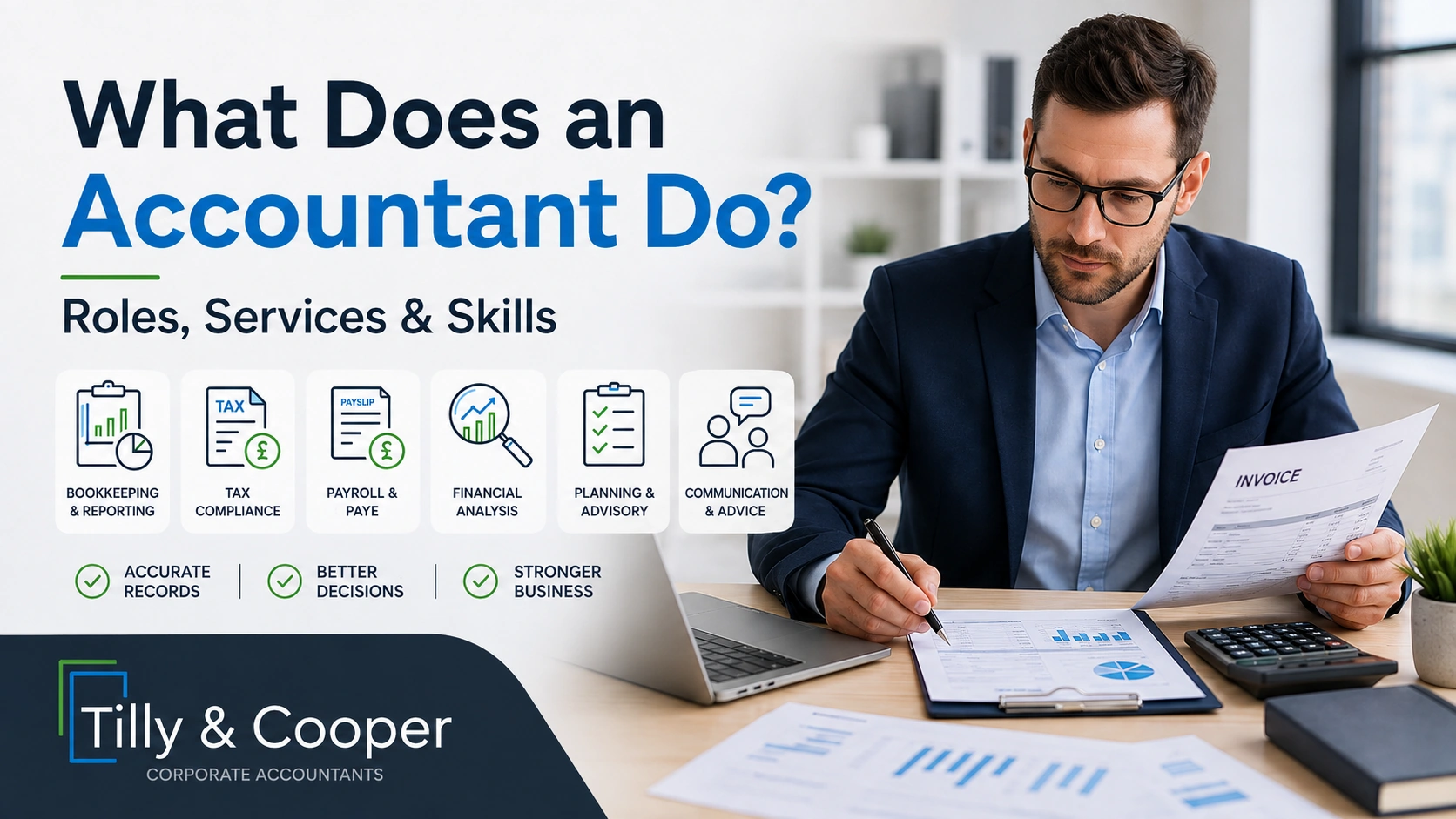
What Does an Accountant Do? Roles, Services & Skills
An accountant records, checks, analyses and reports financial information to help businesses and individuals understand their finances, meet their obligations and make better financial decisions. Accountants may prepare financial statements, calculate tax, review accounting records, manage cash flow and provide financial advice.
Accounting is not only about recording numbers. Its turns financial transactions into useful financial information. This information can show how much a business earns, what it spends, what it owns, what it owes and whether it has enough cash to meet its financial commitments. The exact work of an accountant depends on the type of client, business, industry and accounting role. Some accountants focus on financial reporting, while others specialise in taxation, management accounting, audit support or business advice.
What Is an Accountant and What Does an Accountant Do?
An accountant is a financial professional who prepares, reviews and interprets financial records and financial information. Their work helps individuals and organisations understand their financial position and maintain accurate accounting records. Every business creates financial transactions. These include sales, purchases, expenses, wages, loans, payments and receipts. Accountants organise this financial data through an accounting system so that it can be used for reporting, taxation and business planning. An accountant may also prepare financial statements from those records. Financial statements provide structured information about the performance and financial position of a business.
In the UK, financial reporting requirements depend on the type and size of the organisation. UK Generally Accepted Accounting Practice, commonly called UK GAAP, is the body of accounting standards issued by the Financial Reporting Council. Standards within the UK framework include FRS 102 and FRS 105.
What Does an Accountant Actually Do?
An accountant manages and interprets financial information so that it can be used for accounts, tax compliance, financial control and business decisions. A large part of accounting begins with financial records. An Auditor may review sales, expenses, bank transactions, invoices, assets, liabilities and other entries to make sure that they have been recorded correctly.
The accountant can then use these records to prepare financial reports. These reports help owners and managers understand whether a business is profitable, how much money it owes and how its financial position is changing. Accountants may also calculate tax liabilities and prepare information required for tax returns. They can identify relevant expenses, allowances and tax reliefs where the rules allow them.
Another important part of accounting is analysis. Accounting specialists can compare income, costs, profit and cash flow over different periods to identify trends or financial problems. Financial accountants, in particular, are responsible for preparing and communicating accurate financial information to relevant interested parties. Their work also connects with company law and financial reporting standards.
What Are the Main Roles of an Accountant?
The main role of an accountant is to turn financial records into reliable financial information that can be used for reporting, compliance and decision-making. One role is financial recording and review. An accountant checks whether business transactions have been entered into the correct accounts and whether the accounting records provide a reasonable picture of the business.
Another role is financial reporting. Tax adviser use accounting data to prepare reports such as the profit and loss account, balance sheet and, where relevant, cash flow statement. Accountants may also provide tax support. They can calculate taxable profits, prepare tax returns and explain when tax liabilities become payable.
Financial control is another part of the role. A tax professional can review balances, reconcile accounts and identify unusual or incorrect transactions. Many accountants also provide business advice. Financial information can help a business understand its costs, pricing, profit margins, cash requirements and future funding needs.
What Are the Main Responsibilities of an Accountant?
An accountant is responsible for preparing and reviewing financial information carefully and accurately within the scope of their role. Accountants often review ledgers and accounting records to identify errors, missing transactions or unusual balances. They may compare accounting records with bank statements and other supporting documents through a process called reconciliation. Accountants also prepare financial reports from the information recorded during the accounting period. These reports allow owners, directors and managers to assess business performance and financial position.
Where tax services are provided, an accountant may calculate taxable income or profit and prepare the information needed for tax returns. However, appointing an accountant does not normally transfer a company’s legal responsibilities to the accountant. For example, UK company directors remain responsible for keeping company records, preparing annual accounts, completing the Company Tax Return and ensuring Corporation Tax obligations are dealt with.
What Are the Different Types of Accountants?
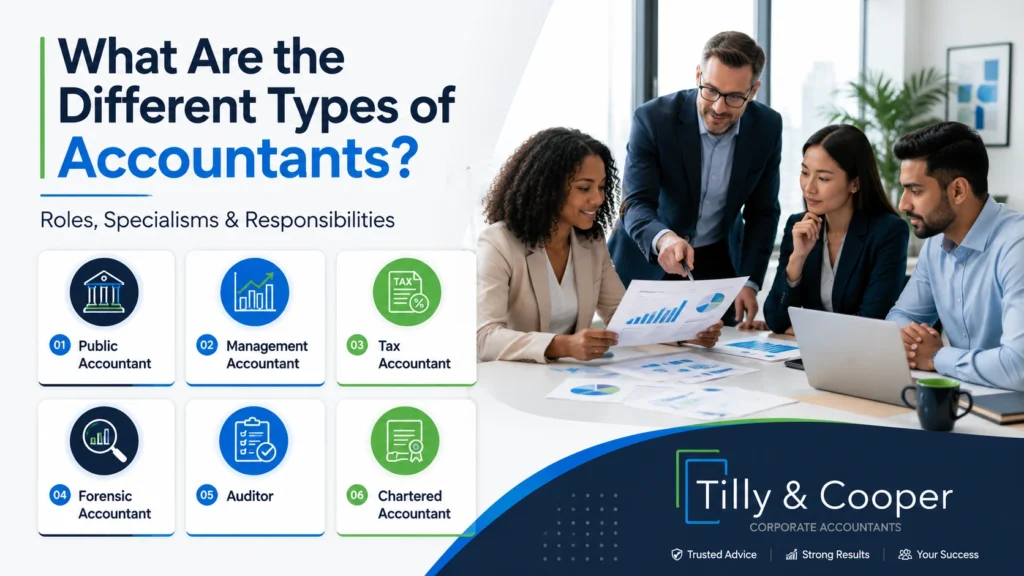
Different types of accountants specialise in financial reporting, management information, tax, forensic investigations or public practice. A financial accountant focuses mainly on preparing and reporting financial information. Their work can include financial statements, reporting requirements and maintaining accurate financial records. Financial accountants work across many types of businesses and organisations, rather than only listed companies. A management accountant focuses on financial information used internally by management. Their work can include budgeting, forecasting, cost analysis, performance measurement and assessing ways to improve profitability.
A tax accountant specialises in taxation. They may calculate tax liabilities, prepare tax returns, review the tax treatment of transactions and advise businesses or individuals on their tax position. A forensic accountant investigates financial records where fraud, disputes or other financial irregularities may be involved. Their work may include tracing transactions and analysing financial evidence. A public practice accountant provides accounting services to external clients through an accountancy practice. The National Careers Service describes private-practice accountants as professionals who prepare accounts and tax returns for businesses and individuals.
What Services Can an Accountant Provide?
An accountant can provide services covering accounts, tax, bookkeeping, payroll, cash flow, financial reporting and business advice. One of the most common services is preparing annual or management accounts. The accountant takes information from the accounting records and turns it into structured financial reports.
An accountant may also provide tax services. These can include tax calculations, tax returns, tax planning and explanations of available expenses, allowances or reliefs. Bookkeeping can also form part of an accounting service. This involves keeping records of sales, purchases, expenses, receipts and payments throughout the accounting period.
Some accountants provide payroll support. Payroll accounting can include calculating employee pay, deductions and employer liabilities and maintaining the records needed for payroll reporting. Cash flow forecasting is another useful accounting service. A forecast estimates how much cash is expected to enter and leave the business during a future period. It can help identify possible cash shortages before they become serious. Accountants can also provide business advice based on financial data. This might cover budgets, costs, pricing, funding, investment decisions or business structure.
What Does an Accountant Do in the UK?
A UK accountant helps businesses and individuals manage financial records, accounts and tax obligations within the UK financial and regulatory system. For a limited company, an accountant may prepare statutory annual accounts using the company’s financial records. Companies generally submit their annual accounts to Companies House, while the Company Tax Return is filed with HM Revenue & Customs.
An accountancy professional can also calculate a company’s Corporation Tax liability and prepare the tax computation that supports its Company Tax Return. VAT is another common area of work. Accountants may help businesses understand VAT registration, maintain suitable VAT records and prepare VAT returns.
For sole traders and individuals, accountants may assist with Self Assessment by organising financial information, calculating taxable income and preparing the relevant tax return.UK accountants may work under different financial reporting frameworks depending on the organisation concerned. The Financial Reporting Council sets UK accounting standards, including FRS 102, while FRS 105 is available for qualifying entities using the micro-entities regime.
What Does an Accountant Do for a Business?
An accountant helps a business understand its financial position, maintain accurate records, prepare financial reports and manage its accounting and tax requirements. A business needs reliable financial information to understand how it is performing. An accountant can review income, expenditure, assets, liabilities and cash balances and explain what those figures mean.
For example, a business may be increasing its sales without increasing its profit. An accountant can analyse the figures to identify whether higher costs, lower margins or other financial changes are affecting profitability. Accountancy professionals can also prepare budgets and forecasts. These allow management to compare expected financial performance with actual results. Good accounting information therefore supports both compliance and business management.
How Does an Accountant Help a Small Business?
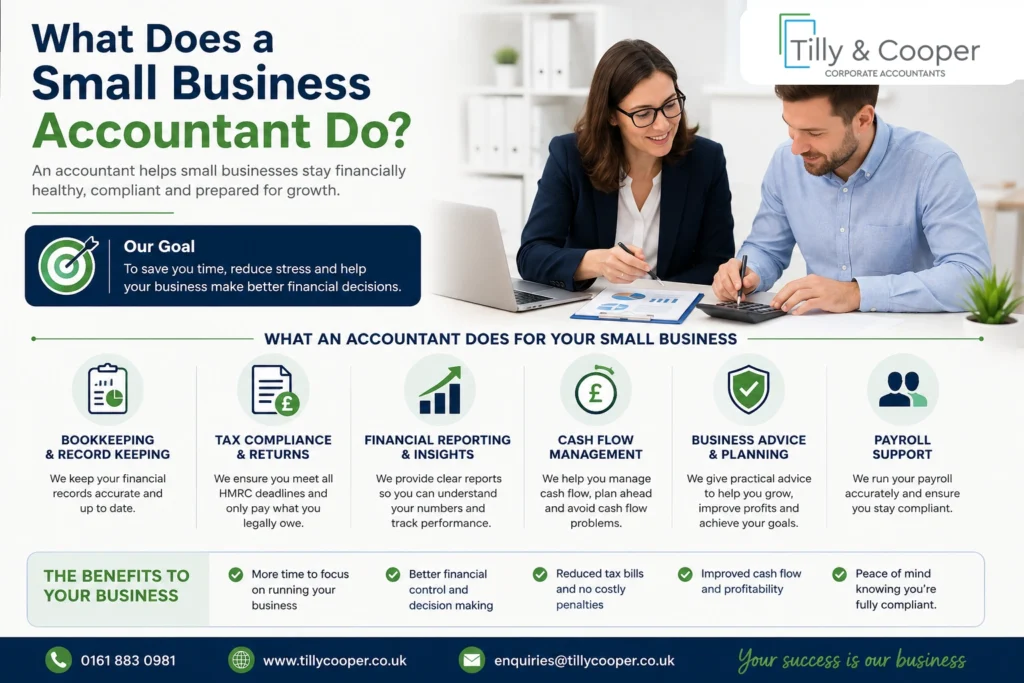
An accountant can help a small business with bookkeeping, annual accounts, tax returns, VAT, payroll, cash flow and financial planning. Small business owners often perform several roles themselves. Managing customers, suppliers, employees and daily operations can leave limited time for accounting. An accountant can review bookkeeping records and check whether transactions have been entered and classified correctly. Accurate records make the preparation of accounts and tax returns easier. Accountants may also explain which business expenses can receive the appropriate tax treatment and help owners understand their tax liabilities.
For a limited company, an accountant may prepare statutory accounts from the company’s records and assist with the Company Tax Return. The accounts and tax return have different filing requirements: accounts are associated with Companies House, while the Company Tax Return is filed with HMRC. Small businesses may also use accountants when seeking finance. Reliable accounts, forecasts and management information can help owners explain the financial position of the business to lenders or investors.
How Can an Accountant Help a Business Grow?
An accountant can support business growth by analysing financial performance, forecasting cash flow, monitoring costs and assessing future business decisions. Growth normally requires money. A business may need to recruit employees, buy equipment, increase stock, move premises or enter a new market. An accountant can estimate how these decisions could affect revenue, costs, profit and cash flow. For example, a financial forecast can show whether expected additional sales are likely to cover the cost of recruiting another employee.
Accountants can also analyse profit margins and operating costs. This allows management to identify areas where spending may need to be controlled or prices reviewed. Accounting information does not guarantee business growth, but it gives management better information on which to base financial decisions.
What Does a Tax Accountant Do?
A tax accountant specialises in helping individuals and businesses understand, calculate and report their tax obligations. A tax accountant reviews financial information and applies the relevant tax rules to income, expenses, assets and transactions. For businesses, this may include calculating taxable profit, identifying allowable expenses and preparing tax returns.
For UK limited companies, a tax accountant may calculate Corporation Tax and prepare the supporting tax computation and Company Tax Return. Tax accountants may also advise clients on the tax effect of future transactions. Tax planning should involve arranging financial affairs efficiently within the law rather than hiding income or avoiding legal tax obligations.
What Is the Difference Between an Accountant and a Tax Accountant?
The main difference between an accountant and a tax accountant is their area of focus. An accountant may work across several areas of financial management, while a tax accountant specialises mainly in taxation. A general accountant may work with accounting records, financial statements, bookkeeping, budgets, cash flow and business advice. A tax accountant focuses more closely on tax calculations, tax returns, tax legislation, allowances, reliefs and tax planning.
The two roles can overlap. Many financial advisers have strong tax knowledge and provide both accounting and taxation services to their clients. A business therefore does not always need separate general and tax accountants. The appropriate arrangement depends on the complexity of its financial and tax affairs.
What Is the Difference Between Bookkeeping and Accounting?
The main difference between an accountant and a bookkeeper is that bookkeeping focuses mainly on recording financial transactions, while accounting involves interpreting, reporting and analysing that financial information. A bookkeeper records transactions such as sales, purchases, expenses, receipts and payments. They may also reconcile bank accounts and keep the accounting software up to date. An accountant can use those records to prepare financial statements, calculate tax liabilities and analyse business performance.
Bookkeeping therefore forms an important part of the accounting process. Accurate bookkeeping gives an accountant reliable financial information to work with. Many small businesses use a bookkeeper for regular transaction processing and an accountant for accounts, tax and higher-level financial advice.
What Skills Does an Accountant Need?
An accountant needs numerical accuracy, analytical ability, accounting knowledge, attention to detail, communication skills and confidence with accounting technology. Numerical accuracy matters because accountants work with financial data that can affect accounts, tax calculations and business decisions. Analytical skills allow an accountant to move beyond the numbers. They can compare periods, identify trends and understand why financial performance has changed. Technical accounting knowledge is also important. An accountant needs to understand the accounting principles, financial reporting requirements and tax rules relevant to their work.
Technology has become an important part of modern accounting. Accountants may use systems such as Xero, QuickBooks, Sage and other financial software to process and analyse accounting information. Communication is equally valuable. Accountants frequently need to explain financial information to business owners, directors and managers who may not have an accounting background. ACCA also identifies commercial awareness and communication as important skills in modern accounting and finance roles.
How Much Does an Accountant Earn in the UK?
An accountant’s salary in the UK depends on experience, qualifications, location, employer and the type of accounting work performed. There is no single salary that applies to every accountant. Different accounting careers have different salary ranges.The UK National Careers Service currently gives an indicative salary range of around £25,000 for a starter to £60,000 for an experienced private-practice accountant. It gives management accountants an indicative range of approximately £30,000 to £60,000. These figures are general career estimates rather than fixed salary limits.
Actual earnings may be higher or lower depending on seniority, professional qualifications, specialisation, location and management responsibility. An accountant who progresses into financial management, specialist advisory work or senior leadership may therefore earn more than the typical career-profile figures.
Do You Need an Accountant for a Business?
A business does not always have to appoint an accountant, but professional accounting support can become valuable as its financial affairs become more complex. A small sole trader with straightforward transactions may be able to maintain accounting records and deal with some tax obligations independently. A growing business may require more support when it becomes VAT-registered, employs staff, operates as a limited company, raises finance, or enters into more complex transactions.
A finance professional can help reduce errors, improve financial reporting and explain accounting and tax requirements. However, using an accountant does not remove the owner’s or director’s legal responsibilities. A UK company director remains responsible for duties such as keeping company records, preparing annual accounts and ensuring required company and tax filings are dealt with.
When Should You Hire an Accountant?
You should consider hiring an accountant when accounting, tax or financial decisions become difficult or too time-consuming to manage yourself confidently. Starting a business can be a useful time to speak with an accountant because the choice between operating as a sole trader, partnership or limited company can affect accounting and tax responsibilities.
Professional support can also be valuable when preparing your first tax return or company accounts. Employing staff creates further payroll and reporting responsibilities, while VAT registration introduces another area of record-keeping and tax compliance. Businesses seeking finance may benefit from professional accounts, forecasts and management information.
Growth is another common reason to use an accountant. Increasing turnover, employing more people, buying significant assets or expanding into new markets can make financial management more complicated. The best time to appoint an accountant therefore depends on the needs and complexity of the business rather than one fixed stage.
Why Is an Accountant Important to a Business?
An accountant is important because reliable financial information helps a business understand its performance, manage its obligations and plan for the future. Without accurate financial records, an owner may struggle to understand how much profit the business is making, how much money it owes or whether sufficient cash is available for upcoming costs.
An accountant connects daily financial transactions with wider financial information. Sales, purchases and expenses become accounts, tax calculations, budgets, forecasts and performance reports. This allows financial information to become useful for decision-making rather than simply being stored for compliance purposes. A good accountant therefore does more than report what has happened. They help business owners understand what the financial information means and how it may affect future decisions.

