Choosing a Company Name in the UK: 9 Tips, Checks and Legal Rules
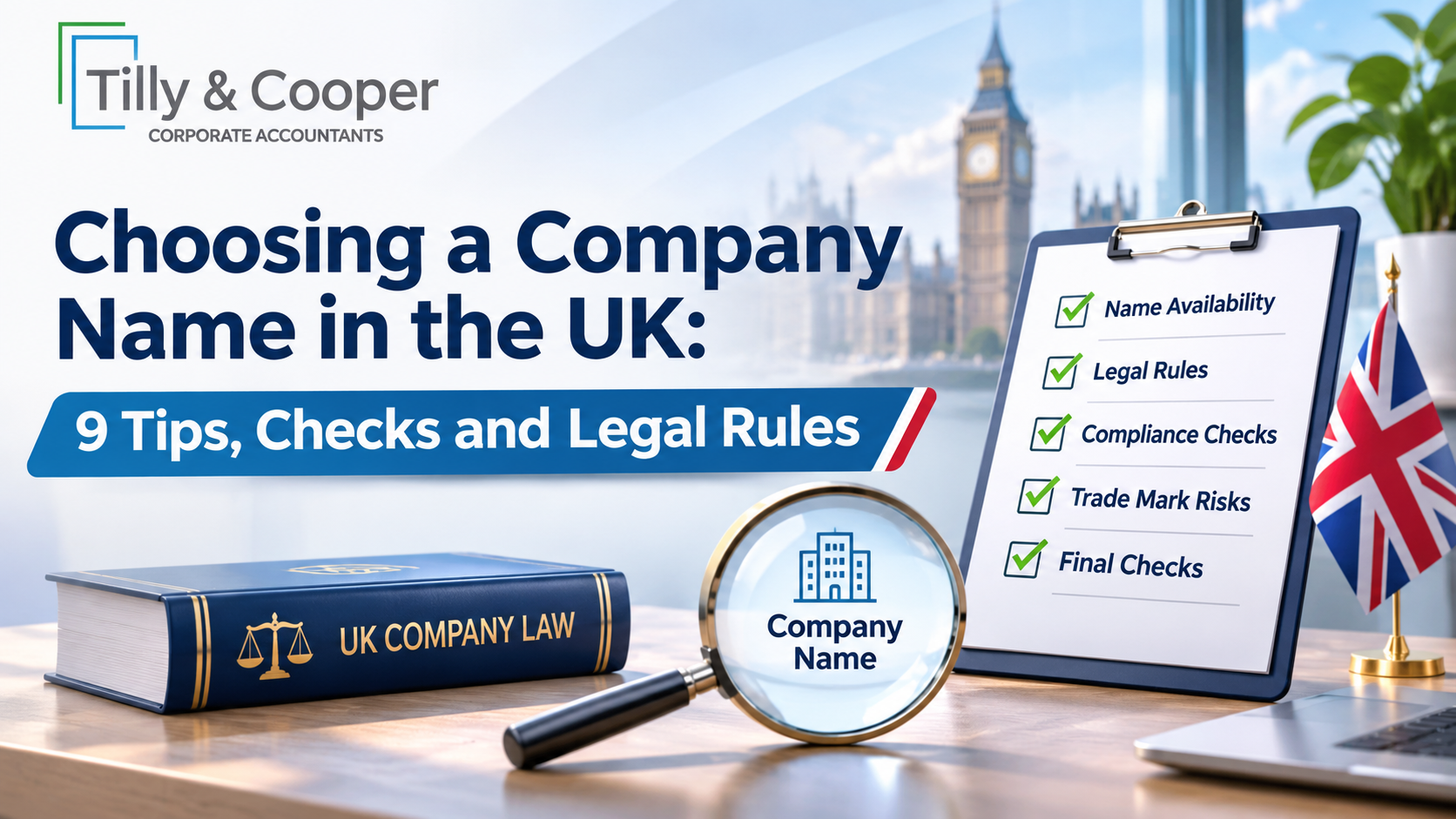
Choosing a company name in the UK requires more than finding a memorable business name. You must check Companies House availability, comply with UK naming rules, search for conflicting trade marks, and consider how customers will recognise your brand. A private limited company’s registered name must normally end in Limited or Ltd, subject to specified exceptions. Companies House will assess the proposed name under the Companies Act 2006 and relevant regulations. This explains nine practical company naming tips, the official name-checking process, trade mark protection, registered names, trading names and company incorporation requirements.
What Must You Check Before Choosing a UK Company Name?
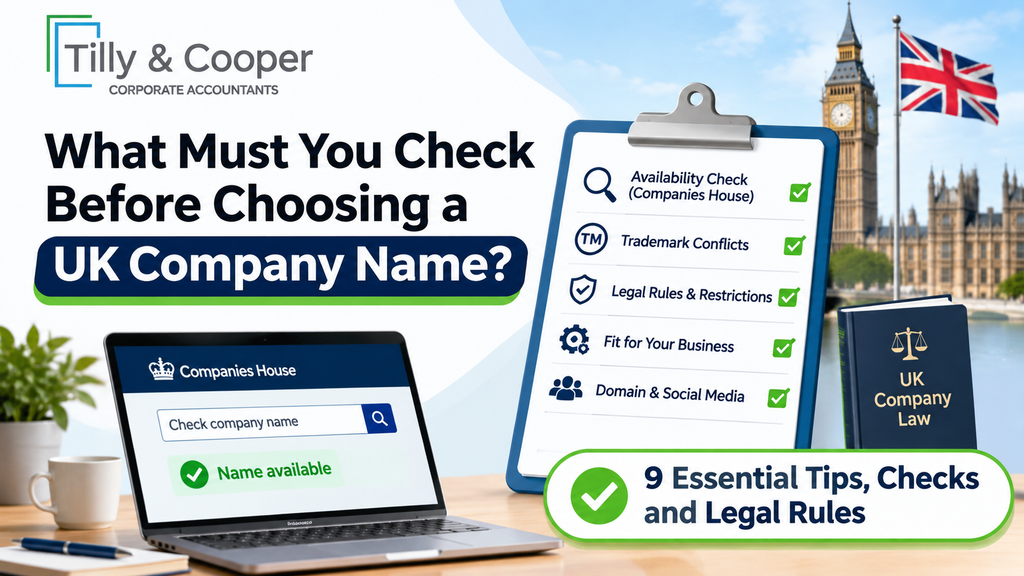
Before registering a limited company, check whether your proposed name meets the legal requirements and suits your business.
| Question | Answer |
| Who registers UK company names? | Companies House |
| Does a company name need to be unique? | It must satisfy statutory same-name and similarity rules |
| Does a limited company require Ltd or Limited? | Usually, unless a qualifying exemption applies |
| Can you check company name availability online? | Yes, using Companies House |
| Does incorporation protect a trade mark? | No |
| Can a company use a trading name? | Yes, subject to relevant naming and disclosure requirements |
| Does a domain name need to match the company name? | No |
| Can a registered company name be changed? | Yes, using the appropriate legal procedure |
A name accepted by Companies House is not automatically free from trade mark disputes. The two checks establish different matters.
Which Nine Tips Help You Select a Business Name?
A suitable business name should be legally acceptable, distinguishable from competitors and easy for customers to use.
1. Choose a Name Customers Can Spell
Use words that customers can pronounce and type without difficulty. For example, “Oakfield Digital Ltd” is easier to communicate than a name containing several unfamiliar spellings. A short company name can be useful, but there is no requirement to keep it below a particular number of words.
2. Match the Name to Your Business Activity
Your company name should suit the products, services, or customers your business serves. An accounting practice may choose a professional name associated with financial services, while a design studio might use an invented brand. Avoid wording that falsely suggests regulatory approval, professional qualifications or government connections.
3. Follow Companies House Naming Rules
Private limited companies generally need a registered name ending in Limited or Ltd. The company must also meet the rules concerning identical names, sensitive expressions, prohibited wording and misleading connections. Companies incorporated in Wales may use the permitted Welsh endings, and some qualifying companies can obtain an exemption from the ordinary limited-company ending.
4. Research Existing Company Names
Search the Companies House register for businesses with identical or similar names. A company name may be rejected if the law treats it as the same as an existing registered name. Even where a proposed name is available for incorporation, a confusingly similar name may create commercial or legal problems.
5. Check Domain and Social Media Availability
Check whether a suitable .co.uk, .uk or .com domain is available. You should also search relevant social media platforms for existing accounts using similar names. Domain registration is separate from company incorporation and trade mark registration. Purchasing a domain does not automatically grant the right to use the corresponding business name.
6. Allow for Future Business Expansion
Select a name that remains appropriate if your business grows. For example, “Northfield Laptop Repairs Ltd” describes a narrow service. A company intending to expand into wider IT support may prefer a broader name. A descriptive name is not necessarily unsuitable, but consider how it will fit future activities.
7. Make the Name Distinctive
A distinctive company name helps customers identify your business among competitors. Purely descriptive expressions can be more difficult to protect as trade marks because they may not distinguish one undertaking’s goods or services. Invented words and unusual combinations can offer stronger brand identity, but they still require trade mark clearance.
8. Test the Name With Potential Customers
Show several shortlisted names to prospective customers. Ask them to spell each name, pronounce it and explain what type of business they associate with it. Record any confusion with existing companies or brands. This feedback helps assess practical usability but cannot establish legal availability.
9. Use Business Name Generators for Ideas
A company name generator can help produce combinations of industry terms, descriptive words and invented names. Treat the results as initial ideas rather than approved company names. Complete the Companies House name check, trade mark search and domain search before making your final choice.
How Do You Check Company Name Availability Through Companies House?
To check company name availability in the UK, enter the proposed name into the official Companies House name availability checker. Then search the public register for similar names and review any sensitive-word restrictions. A successful checker result does not reserve the name or guarantee that it is free from trademark conflicts.
The application process is straightforward:
- Open the Companies House name availability checker.
- Enter your proposed company name, including the relevant legal ending.
- Review the availability result.
- Search the public Companies House register for similar names.
- Review applicable sensitive-word and naming restrictions.
- Complete a separate IPO trademark search.
- Submit the name with your incorporation application.
If you have shortlisted a company name, Tilly & Cooper can assist with Company Incorporation and Setup, including name-availability checks and preparation of incorporation information.
How Do “Same As” and “Too Like” Rules Differ?
Companies House applies separate legal tests to names treated as the same as existing registered names and names considered too similar.
| Rule | Meaning | Possible outcome |
| Same as | Differences are disregarded under company-name regulations | Registration normally prevented |
| Too like | Name is excessively similar to an existing registered company name | Registrar may direct a change |
| Sensitive expression | Name includes a regulated word or expression | Approval or evidence may be needed |
| Misleading connection | Name suggests an unauthorised official connection | Registration may be refused |
Changing punctuation or adding a minor expression does not necessarily make a company name distinct under the regulations.
Can Companies Within the Same Group Use Similar Names?
A limited exception may permit a proposed name that would otherwise be treated as the same as an existing registered company or LLP name. The relevant companies must satisfy the same-group conditions, and the existing company or LLP must provide the required written consent. Consent alone is insufficient where the necessary group relationship and filing conditions are absent.
Which UK Laws Control Company Names?
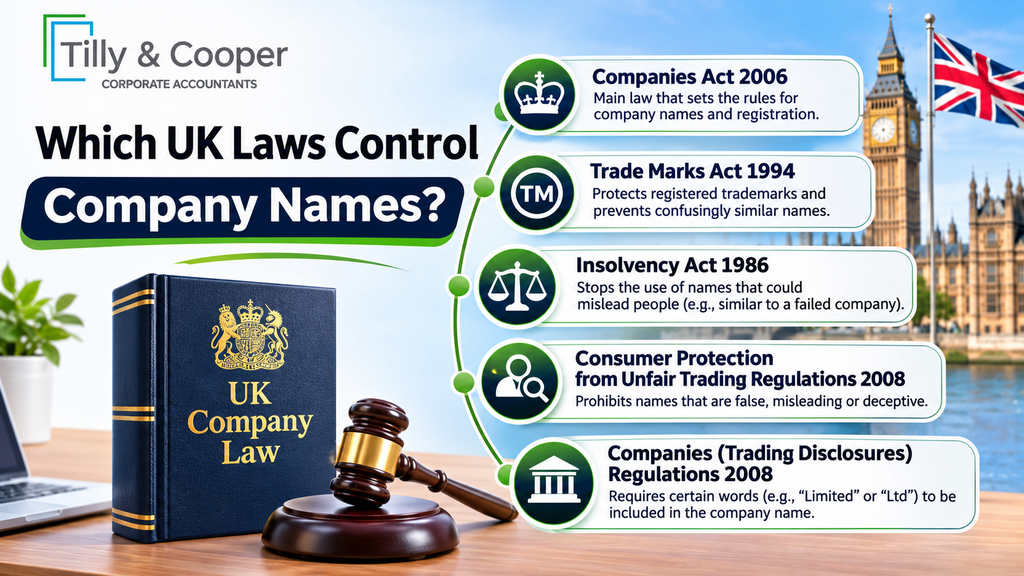
The Companies Act 2006 and related regulations establish requirements governing company names. They address company-name endings, similarity to registered names, prohibited wording, sensitive expressions, and misleading official connections.
When Must a Registered Name End in Limited or Ltd?
A private limited company’s name must generally end with Limited or Ltd. Different legal designations apply to public limited companies and limited liability partnerships. Certain qualifying companies limited by guarantee may be exempt from including Limited in their registered name.
Which Sensitive Words Require Approval?
Certain expressions require consent or supporting evidence because they suggest regulated activities, official connections or particular professional status. The requirement depends on the exact word and how it is used. Check the relevant Companies House guidance and obtain any necessary authorisation before submitting an incorporation application.
What Is the Difference Between a Registered Company Name and a Trading Name?
A registered company name is the legal name recorded by Companies House. A trading name is another name used commercially by the same business. For example, “Northfield Digital Services Ltd” might operate using the trading name “Northfield Creative”. The trading name does not create a separate company.
| Feature | Registered company name | Trading name |
| Recorded as the company’s legal name | Yes | No |
| Used in marketing | Can be | Can be |
| Creates a separate legal entity | Identifies the registered entity | No |
| Automatically registered as a trade mark | No | No |
| Replaces statutory company disclosures | Not applicable | No |
What Information Must a Limited Company Display on Its Website?
A UK limited company’s website must disclose its registered name, registered number, registered office address and jurisdiction of registration. For example, a business using the trading name “Northfield Creative” should identify the actual company behind that brand. A suitable disclosure would read: “Northfield Creative is a trading name of Northfield Digital Services Ltd”, followed by the company’s actual registration number, jurisdiction of registration and registered office address. The relevant information must be accurate and reflect Companies House records.
Does a Sole Trader Need to Register a Business Name?
A sole trader does not need to incorporate a company merely to trade under a business name. However, naming restrictions, disclosure rules and other businesses’ intellectual property rights still apply.
How Can You Check Whether a Company Name Conflicts With a Trade Mark?
Search the UK Intellectual Property Office register before using a proposed company name as a brand. Check identical and similar marks, their owners, legal status, and the relevant goods or services. A registered trade mark can create rights that are separate from the Companies House company-name registration process.
What Does Registering a UK Trade Mark Cost?
Under the IPO fees effective from 1 April 2026, the published application charges include:
| Application | Fee |
| Standard online application, first class | £205 |
| Each additional class | £60 |
| Standard paper application, first class | £250 |
| Right Start initial stage, first class | £125 |
| Right Start second stage, first class | £125 |
A standard online application covering two classes therefore has an official application fee of £265. Application charges do not guarantee registration. An application can face examination objections or third-party opposition.
When Does a Business Receive a Company Registration Number?
Companies House issues a company registration number when the company is successfully incorporated. Checking the availability of a company name does not register the company. The number appears on the certificate of incorporation and the public Companies House record. It normally remains unchanged if the company later changes its registered name.
How Can You Change an Existing Limited Company’s Name?
A limited company can change its registered name through a qualifying resolution or a procedure permitted by its articles of association. The new name takes legal effect once Companies House registers the change.
Which Companies House Form Should You Use?
| Form | Official purpose |
| NM01 | Notice of unconditional change of name by resolution |
| NM02 | Notice of conditional change of name |
| NM03 | Confirmation that conditions attached to a name-change resolution have been met |
| NM04 | Name change by a procedure provided for in the company’s articles |
| NM05 | Directors’ resolution for specified cases, including restoration or a direction to reinstate Limited or Cyfyngedig |
NM05 is not a general alternative to NM01. Companies House restricts its use to the circumstances described in the form guidance. The ordinary online name-change procedure currently costs £20, while the paper filing costs £30. Check the official service before submitting an application, particularly if requesting same-day processing.
Frequently Asked Questions About UK Company Names
Normally, no. Companies House applies statutory same-name restrictions, although qualifying same-group exceptions may be available.
Yes. Trade mark registration is not a general condition of limited company incorporation.
Yes. A business can use a domain that differs from its registered legal name, provided it complies with relevant naming, intellectual property and disclosure requirements.
No. A company name should identify the business and meet registration requirements. SEO performance also depends on the website’s content, technical accessibility and relevance to users’ searches.
Yes. A company can follow the appropriate Companies House procedure. The company number normally remains unchanged.
No. A generated suggestion must still be checked against Companies House rules and relevant intellectual property rights.
Get Help Registering a UK Limited Company With Tilly & Cooper
Tilly & Cooper Corporate Accountants supports business owners with UK limited company incorporation, Companies House registration and preparation of company details. Our Company Incorporation and Setup service includes name-availability assistance, incorporation documents, director and shareholder information and initial share structure.
If you have shortlisted a company name, provide your preferred options and proposed business activity so the team can help you prepare the registration information. Trade mark clearance or intellectual property disputes may require specialist legal advice. Ready to register your company? Explore our Company Incorporation and Setup service or contact Tilly & Cooper to discuss your application.