UK Company Name Availability: How to Check Before You Register
Check UK company name availability with the Companies House name checker. Enter your proposed name and review similar results. Companies House decides whether to accept the name when you register. Check naming restrictions and search the UK trade marks register separately. Then check trading names, domains and social handles. Recheck your preferred name just before you apply to incorporate.
| Check | What it helps you establish | Where to look |
| Company name availability | Whether the proposed name may clash with the company index | Companies House name checker |
| Company registration | Whether a company exists and what status it holds | Companies House register |
| Trade mark conflicts | Which similar marks cover relevant goods or services | UK Intellectual Property Office |
| Trading name use | Which businesses use similar branding in your market | Search engines, directories and marketplaces |
| Domain and social handles | Which web addresses and usernames you can claim | Domain registrars and social platforms |
Six Checks Before You Choose a UK Company Name
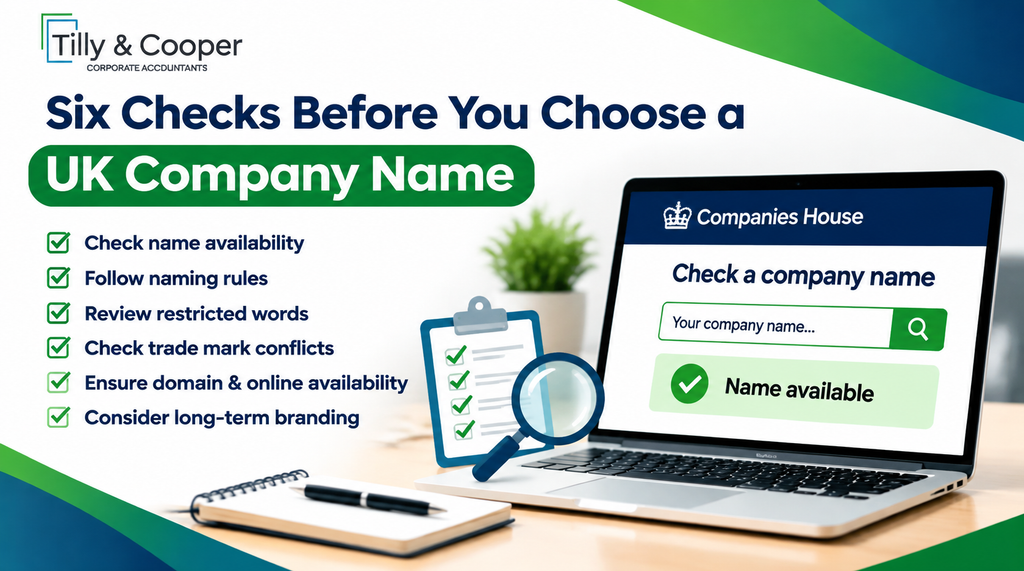
Keep two or three names on your shortlist. Run the same checks for each one. Record the search date, wording, and any close matches.
Step 1. Search the Companies House Name Checker
Enter the full name you plan to register. Search again using its distinctive words without ‘Limited’ or ‘Ltd’. Try singulars, plurals, alternative spellings, and different spacing. Say similar names aloud to compare how they sound. Use the Companies House register to inspect individual matches. Check each company’s registered name, status, and incorporation date. Use the company number to distinguish similar records. A dissolved company’s status alone tells you little about brand rights.
Step 2. Check Name Endings and ‘Same As’ Rules
Companies House disregards certain differences when comparing names. Switching ‘Limited’ to ‘Ltd’ cannot distinguish two names. Some punctuation and common words also make no legal difference. Private limited companies usually end their names with ‘Limited’ or ‘Ltd’. Companies registered in Wales can use ‘Cyfyngedig’ or ‘Cyf’. Certain companies limited by guarantee can qualify for an exemption. Check the conditions before leaving the end of your application.
Step 3. Identify Sensitive Words That Need Approval
Check the sensitive words list for your proposed wording. Some terms require approval before you can use them. Names suggesting a government connection can also require approval. Check the relevant annex for the approval criteria and contact details. Include the required evidence with your application.
Step 4. Search the UK Trade Marks Register
Search the UK Intellectual Property Office register for similar marks. Start with the full name and its distinctive words. Try alternative spellings and words that sound alike. Open close matches and check their status, owner, and scope. Compare their listed goods and services with your planned activities.
Suppose the Companies House checker shows no company name clash. The UK trade marks register shows a similar mark. It covers services you plan to offer. Review which services the mark covers before ordering branded materials. Ask a trade mark attorney about any close match.
Step 5. Check Trading Names, Domains and Social Handles
Search the name online to find businesses already using it. Check directories, maps, marketplaces and social profiles. Compare their services and locations with your intended market. Check a domain registrar for your preferred web address. Check each social platform for the username you want. Record suitable alternatives if someone already uses your first choice.
Step 6. Repeat the Name Check Before Incorporation
Run the Companies House check again just before filing. Another applicant may register the name after your first search. Keep a second choice in case your preferred name becomes unavailable. Wait for Companies House to confirm registration. Complete your trade mark checks before ordering signage or packaging.
What Makes a UK Company Name Unavailable?
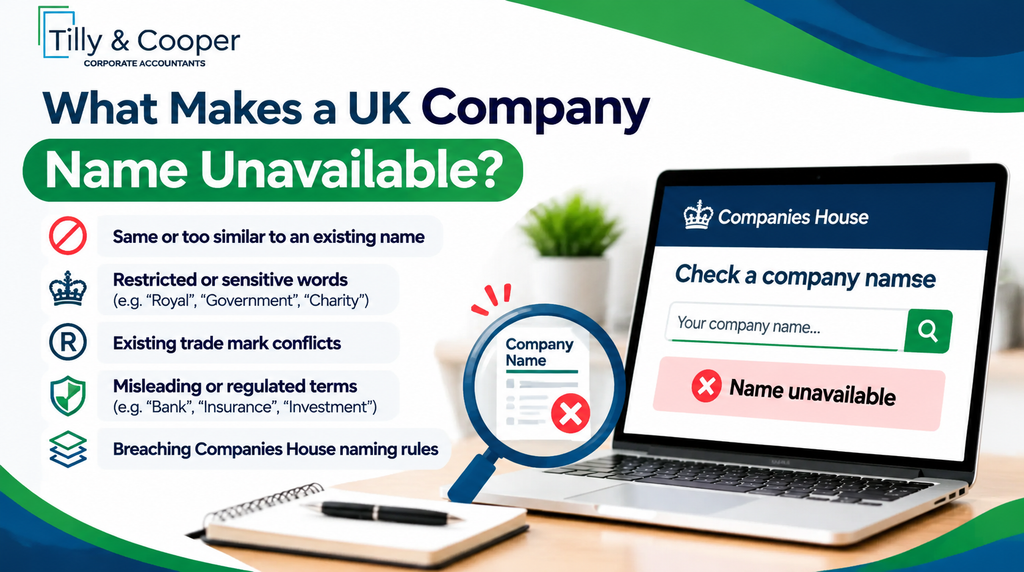
Companies House generally rejects names it treats as ‘same as’. It also rejects names that breach other naming restrictions. Some sensitive words need approval before Companies House can register them.
When Does the ‘Same As’ Exception Apply?
The exception applies when both entities belong to the same group. The existing name can belong to a company. It can also belong to a limited liability partnership (LLP). Ask that company or LLP to confirm in writing. Their response must confirm they have no objection.
How Does a ‘Too Like’ Name Differ?
A successful ‘too like’ complaint can trigger a later name change. Companies House compares the spelling, appearance and sound of both names. The ‘too like’ test excludes trade mark infringement.
What Should You Do if Companies House Rejects Your Name?
Check the rejection reason before resubmitting your application. Choose a distinct name if the company index shows a conflict. Obtain the required approval if the name contains a sensitive expression. Run the same checks on any replacement name.
How Do You Check Trading Name Availability?
To check whether a trading name is available in the UK, search the Companies House register and the UK Intellectual Property Office’s trade mark database. The Companies House name checker covers registered company names. Search the trade mark database separately for your proposed name and similar spellings, focusing on marks that cover goods or services like yours.
Next, search Google, Google Maps, business directories and social media for businesses already using the name or a close variation. Pay particular attention to businesses in your sector that serve the same customers, as they may trade under a different name from the one on the Companies House register. Check your preferred domain name and social media handles before committing to the name.
How Does a Registered Company Name Differ From a Trading Name?
A registered company name identifies the legal entity at Companies House. A trading name identifies the business to its customers. A limited company can trade under a different name. Companies House registers the legal company name during incorporation. Trading names also face restrictions on certain words and endings.
Can You Reserve a UK Company Name Before Incorporation?
No. Companies House does not let you reserve a UK company name before incorporation. You can use its name checker to see whether your preferred name is available, but another applicant could register it before your company is incorporated. It’s worth checking again just before you submit your application. If you’ve settled on a name but need more time before you start trading, you can register the company now and begin trading later. If the company is dormant, you’ll still need to file annual accounts and a confirmation statement with Companies House.
How Do You Register or Change a UK Company Name?
To register a UK company name, check that your chosen name is available and meets Companies House naming rules. Then include it in your incorporation application. Once Companies House approves the application, your registered name will appear on your certificate of incorporation. To change an existing company name, you can usually ask shareholders to approve it by special resolution. You can then file the change online or send form NM01 by post with a copy of the resolution. If your company’s articles of association allow the change through a different procedure, use form NM04. The new name takes effect once Companies House registers it.
What Does Companies House Charge for Incorporation and Name Changes?
Companies House charges £100 for standard online incorporation. Standard paper incorporation costs £124. A standard name change costs £20 online or £30 by post.
| Companies House filing | Online | Paper |
| Standard incorporation | £100 | £124 |
| Standard company name change | £20 | £30 |
File online only when you change the name by special resolution. Use paper form NM04 if your articles authorise the change.
How Do You Change an Existing Company’s Registered Name?
Start by checking that your new name is available and meets Companies House naming rules. In most cases, shareholders approve the change by passing a special resolution. You can then file the change online for £20 or send form NM01 by post with a copy of the resolution and a £30 fee. If your company’s articles of association allow a different way to approve the change, follow that procedure and send form NM04 by post. Your new registered name takes effect on the date Companies House issues the new certificate of incorporation.
No. It checks proposed company names against the Companies House index. Search the UK trade marks register for similar marks. Check business directories and websites for similar trading names.
Yes. Companies House registers your company name when you incorporate. You can start trading later. Companies House offers no standalone name reservation before incorporation.
Companies House rejects offensive names and names containing computer code. Some sensitive words and expressions require prior approval. Check the official annexes for your proposed wording.
Yes. Companies House can order a change following a successful ‘too like’ complaint. It compares your name with an earlier name on the register. The deadline for issuing that direction is 12 months after registration.