
What Accounting Records Must a UK Business Keep?
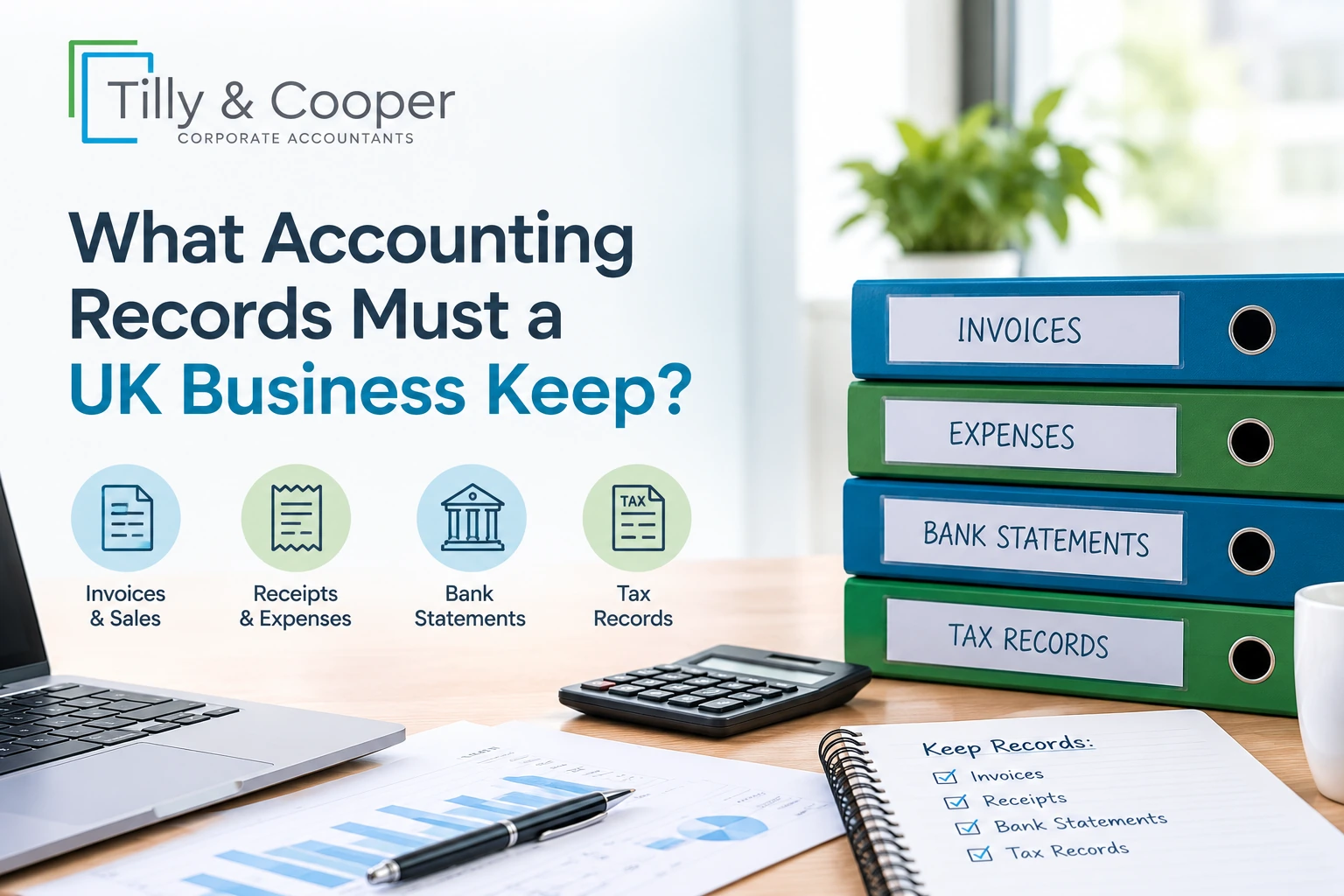
A UK business must keep records that explain its income, spending, assets, liabilities, and financial transactions. Limited companies have additional duties under company and tax law. This guide focuses mainly on UK limited companies. Sole traders and partnerships follow different tax record-keeping rules in some areas. Accounting records create a clear financial trail for the business. They support annual accounts and Company Tax Returns.
Common records include sales invoices, purchase invoices, receipts, bank statements and contracts. Companies may also need stock records and supporting calculations. Under the Companies Act 2006, a company must keep adequate accounting records. These records must explain its transactions and financial position with reasonable accuracy. Good record-keeping also helps directors understand cash, debts, costs and business performance. The exact records required depend on the company’s activities and circumstances.
What Records Must a Limited Company Keep?
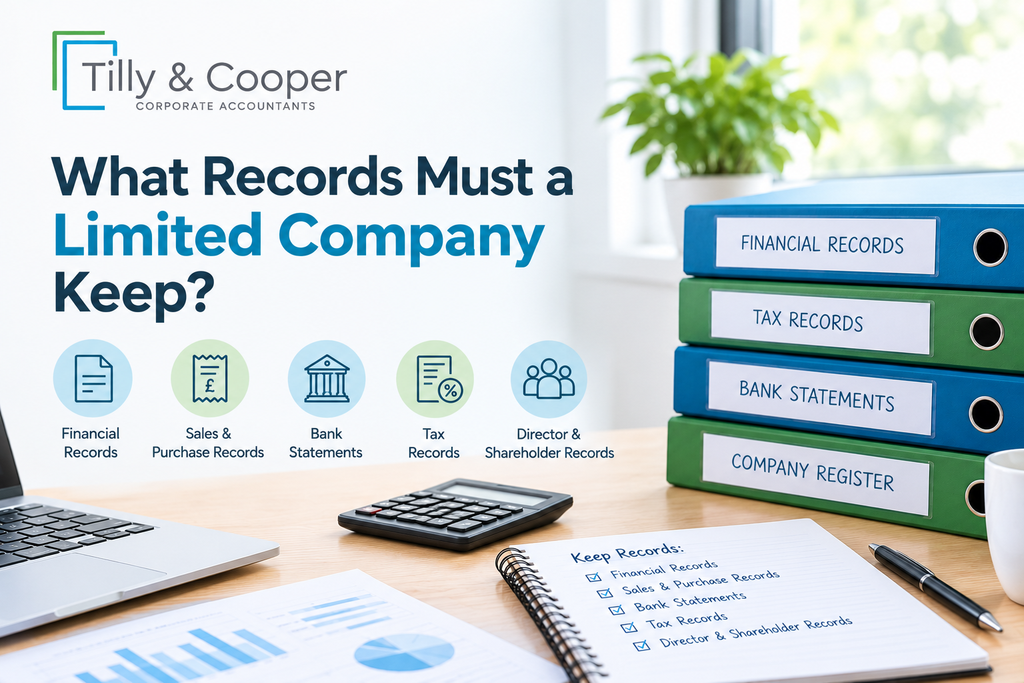
A limited company must keep adequate accounting records that show its transactions, financial position, assets and liabilities. Section 386 of the Companies Act 2006 sets the main accounting-record requirement. The records must show and explain the company’s transactions. They must also disclose its financial position with reasonable accuracy.
This allows directors to prepare accounts that meet company-law requirements. The records must contain day-to-day entries of money received and spent, together with the reason for each transaction. They must also contain records of the company’s assets and liabilities.
Basic accounting records can therefore include:
- money received by the company;
- money spent by the company;
- the reason for each receipt or payment;
- assets owned by the company;
- liabilities owed by the company;
- amounts customers owe the company.
For example, a company receives £5,000 from a customer. Its records should identify the amount, customer and transaction behind the payment. A £2,000 supplier payment should have similar supporting information. Companies also need enough information to prepare their annual accounts and Company Tax Returns. Directors remain legally responsible for these records even when an accountant manages them day to day.
What Evidence Should Support Income and Expenses?
Income and expenses should have supporting documents that explain what happened, when it happened, and how much was involved. An accounting entry alone may not fully explain a transaction. Supporting documents show where the figure came from. Evidence for money received can include:
- sales invoices;
- contracts;
- sales records;
- till rolls;
- bank records;
- payment confirmations.
Evidence for money spent can include:
- supplier invoices;
- receipts;
- purchase orders;
- delivery notes;
- petty cash records;
- bank statements.
HMRC identifies invoices, receipts, contracts, bank statements and similar documents as relevant accounting evidence. Consider a £1,200 software purchase. The supplier invoice explains what the company purchased and the amount charged. The bank transaction shows that the company paid £1,200. The accounting ledger entry shows how the transaction entered the company’s records.
Together, these three records create an audit trail. A reviewer can trace the amount from the original invoice to the payment and accounting entry. The same principle applies to sales. A bank deposit shows that money arrived. A sales invoice explains why the customer paid it. Businesses that need help maintaining these records can use professional bookkeeping and record-keeping support.
What Stock and Goods Records May Be Required?
Companies dealing in goods must keep additional records about stock, purchases and sales.The Companies Act requires relevant companies to keep statements of stock held at each financial year end. They must also keep the stocktaking records used to prepare those statements. For example, a wholesaler may count its products on the final day of its financial year. The company should retain the stock count supporting the figure used in its accounts. Supporting stock records can include:
- purchase invoices;
- stock lists;
- stocktaking sheets;
- inventory reports;
- goods received records;
- sales records;
- supplier information.
Companies dealing in goods can also need records showing goods bought and sold. These records should identify the goods, buyers and sellers in sufficient detail. The detailed buyer-and-seller requirement does not apply to goods sold through ordinary retail trade. This exception does not remove the wider requirement to keep adequate accounting and stock records. Accurate stock information also helps calculate closing stock and cost of sales. Missing stock records can distort both profit and the balance sheet.
What Company Records Are Separate From Accounting Records?
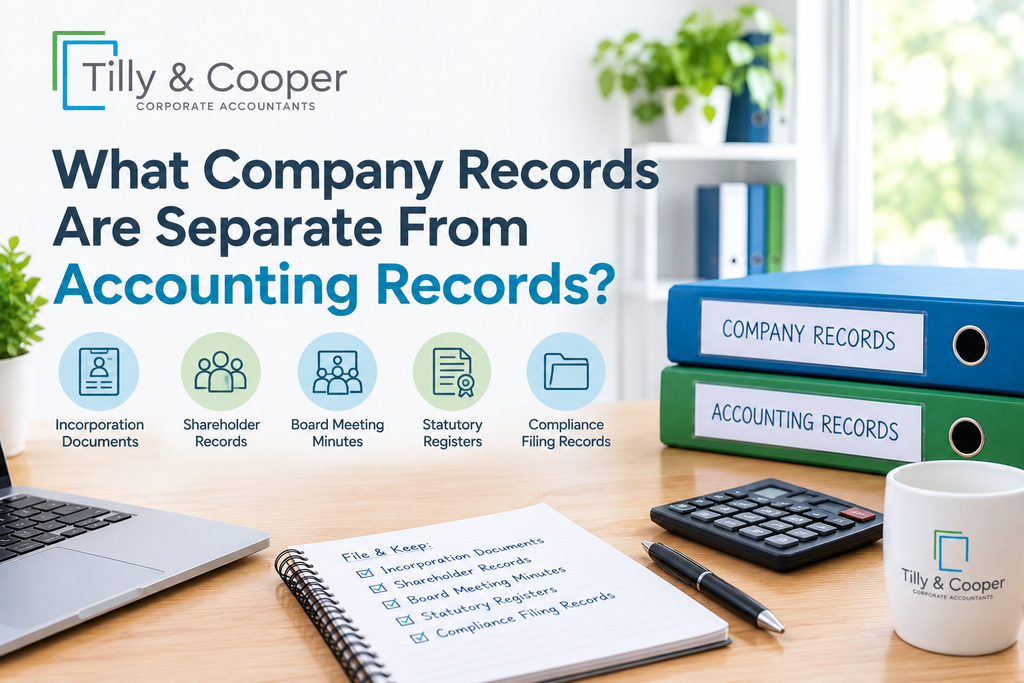
Company records cover corporate ownership and legal decisions, while accounting records explain financial transactions and balances. The two categories are connected but not the same. Companies need records about the company itself alongside their accounting information. Examples can include shareholder details and shareholder decisions. Companies may also need records of resolutions and minutes from general meetings.
Other company records can include information about:
- debentures;
- indemnities;
- share transactions;
- secured loans;
- mortgages and charges;
- directors’ service contracts;
- certain share purchase arrangements.
The exact records depend on the company’s structure and activities. For example, a sales invoice belongs to the accounting records. A shareholder resolution belongs to the company’s corporate records. Both documents may matter to the business, but they serve different purposes. This distinction prevents directors from treating accounting files as the company’s complete legal record.
How Long Must a Limited Company Keep Accounting Records?
A limited company normally keeps Corporation Tax records for six years from the end of the financial year they relate to.Different company law and tax rules can create different retention periods. Under the Companies Act 2006, a private company must preserve required accounting records for three years. A public company must preserve them for six years. Corporation Tax record-keeping requirements usually create a longer practical period for private companies. Companies normally keep relevant records for six years from the end of the last company financial year they relate to. Records can need keeping for longer when:
- a transaction covers more than one accounting period;
- the company buys an asset expected to last more than six years;
- the Company Tax Return was submitted late;
- HMRC starts a compliance check.
These rules make a simple three-year destruction policy unsuitable for many limited companies. A company should consider the longest applicable legal or tax retention period before destroying records.
Where Can a Company Keep Its Accounting Records?
A company can keep its accounting records at its registered office or another place chosen by its directors.However, the location must not prevent proper access. The accounting records must remain open to inspection by the company’s officers at all times. Directors can therefore choose another suitable location, provided this inspection requirement remains satisfied. The records do not all need to remain physically at the company’s registered office.
Special rules apply when accounting records are kept outside the UK. In that situation, suitable accounts and returns relating to those records must also be kept in the UK. Those UK records must show the financial position with reasonable accuracy at intervals of no more than six months.
They must also give directors enough information to prepare compliant company accounts. This rule can matter for UK companies with overseas finance teams or operations. Directors must still have access to enough information to understand the company’s financial position.
What Happens If Accounting Records Are Missing or Incomplete?
Missing or incomplete accounting records can cause HMRC penalties, compliance problems and difficulties preparing accurate accounts.HMRC can fine a company £3,000 for failing to keep accounting records. Directors can also face disqualification in serious cases. Company law places separate duties on company officers to maintain adequate accounting records. Poor records can create problems before any formal penalty occurs. Missing purchase invoices can make business expenses difficult to verify. Missing bank statements can prevent proper reconciliation. Incomplete debtor records can make customer balances unreliable.
These problems can affect annual accounts and Company Tax Returns. Records can also disappear through fire, theft, software failure, or accidental deletion. The company should try to reconstruct missing information. This can involve requesting:
- duplicate bank statements;
- replacement supplier invoices;
- copies of customer invoices;
- payment processor reports;
- payroll records;
- contracts.
If records cannot be fully replaced, the company must tell its Corporation Tax office. It must also explain the issue when completing its Corporation Tax Return. Regular digital backups reduce the risk of permanent record loss.
Can Accounting Software Be Used to Keep Records?
Yes. Accounting software can be used to maintain financial records and supporting digital information. Cloud accounting systems can record sales, purchases, bank transactions, and outstanding balances. Many systems can also connect directly with business bank accounts. Bank feeds can reduce manual entry and support regular reconciliation. Digital records can include:
- sales invoices;
- purchase invoices;
- expense records;
- bank transactions;
- customer balances;
- supplier balances;
- digital receipts.
Software does not remove the company’s responsibility to keep accurate records. A transaction entered into software still needs enough information to explain the underlying business activity. Supporting documents should remain available where required. The format matters less than whether records remain complete, readable, and accessible throughout the required retention period. Businesses should also control system access and maintain reliable backups. Cloud software can make record-keeping easier. However, the quality of the records still depends on accurate and complete information.
FAQs
Businesses should keep receipts and other evidence that supports business expenses and accounting entries. Receipts can show what was purchased, how much was paid, and when the transaction occurred. Invoices and bank records can provide additional evidence.
Digital invoices and electronic accounting records can form part of a company’s record-keeping system.The information should remain complete, readable and accessible throughout the required retention period. The company should also retain enough supporting evidence to explain its accounting and tax figures.
Bank statements alone are usually not enough to explain every business transaction.They show money entering or leaving the account. They may not explain what was bought, sold, or agreed. Invoices, receipts, contracts and other documents provide that detail.
The company must keep the records, while directors remain legally responsible for meeting its record-keeping duties.An accountant or bookkeeper can maintain records on the company’s behalf. Outsourcing the work does not remove the director’s legal responsibility.
A UK limited company normally keeps invoices supporting Corporation Tax records for six years from the relevant financial year end.A longer period can apply where HMRC has opened a compliance check or another retention exception applies.
A small company should keep records of money received, spending, assets, liabilities, and supporting financial documents. Companies dealing in goods can also need detailed stock, purchase and sales records. The records should create a clear trail from the original transaction to the company’s accounts and tax return. Accurate accounting records help a UK limited company meet its Companies Act and HMRC responsibilities. They also give directors reliable information about income, spending, debts, assets and stock. Strong record-keeping therefore supports both legal compliance and reliable financial reporting.

