
Tax Code 1257L Meaning UK: PAYE, Personal Allowance and Payslip Guide
Tax code 1257L means HMRC normally gives you £12,570 of tax-free income through your employment or pension under PAYE. It is the standard code for many UK employees and pension recipients during the 2026–27 tax year. The code does not mean all your earnings are tax-free. Income above the available Personal Allowance is taxed at the relevant Income Tax rates. Your code may change if you receive taxable employment benefits, start another job, receive pension income or owe tax from an earlier year. This explains how 1257L affects your payslip, what cumulative and emergency codes mean, why HMRC changes your allowance and how to correct an inaccurate code.
What Does 1257L Mean on a UK Payslip?
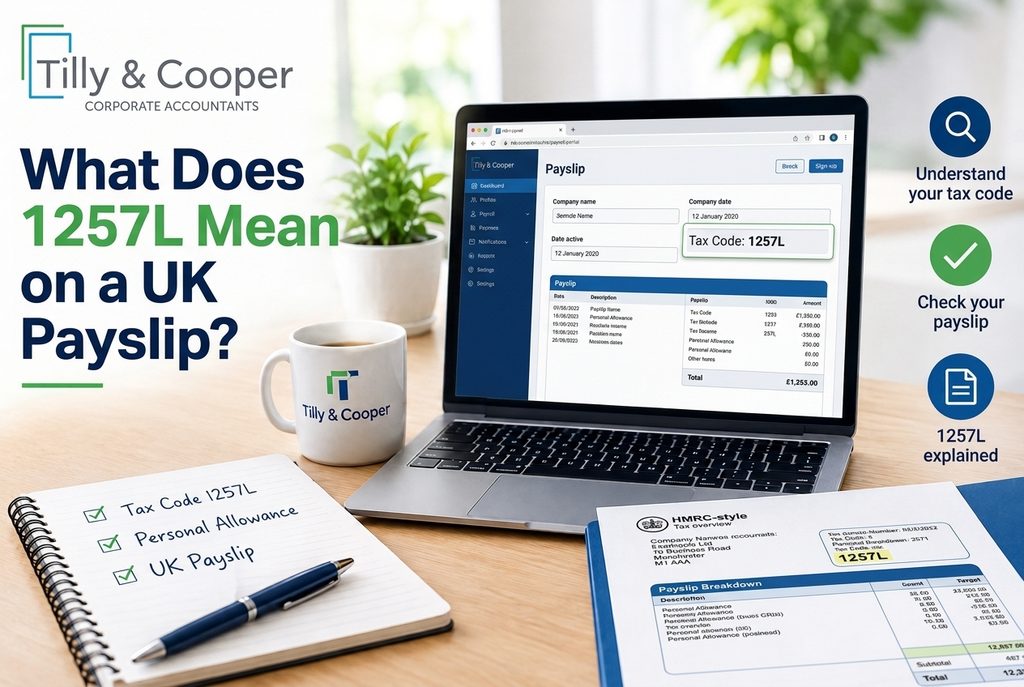
The 1257L tax code tells payroll to allocate the standard Personal Allowance when calculating PAYE Income Tax.
Its components are:
- 1257: Represents £12,570 of tax-free income under the normal tax-code calculation.
- L: Indicates entitlement to the standard Personal Allowance.
The number identifies the allowance allocated to that employment or pension. It does not confirm your total taxable income across every source.
Quick Facts About Tax Code 1257L
| Attribute | Explanation |
| Issuing authority | HM Revenue & Customs (HMRC) |
| Tax collection system | Pay As You Earn (PAYE) |
| Standard annual allowance | £12,570 |
| Tax year | 6 April 2026 to 5 April 2027 |
| Usual calculation | Cumulative |
| Emergency calculation | 1257L W1, M1 or X |
| Applies to everyone? | No |
| National Insurance | Calculated separately |
An employee with several jobs may have their Personal Allowance allocated differently between payroll records.
How Much Is the Personal Allowance in 2026–27?
The standard UK Personal Allowance for 2026–27 is £12,570 per year. This amount of income is generally tax-free, subject to the taxpayer’s circumstances.
HMRC publishes separate PAYE thresholds for payroll calculations.
| Allowance measure | Amount |
| Annual Personal Allowance | £12,570 |
| Exact annual amount divided by 12 | £1,047.50 |
| HMRC published monthly PAYE threshold | £1,048 |
| HMRC published weekly PAYE threshold | £242 |
Payroll systems apply HMRC’s calculation rules, including tax periods and cumulative earnings. Simply dividing annual tax by 12 may not reproduce the deduction on every monthly payslip.
Does Everyone Receive the Full Personal Allowance?
No. HMRC may reduce the allowance allocated through PAYE because of taxable benefits, untaxed income or tax owed. The statutory Personal Allowance also reduces when adjusted net income exceeds £100,000. It falls by £1 for every £2 above that limit and reaches zero at £125,140. Marriage Allowance and other individual circumstances can affect coding calculations.
How Much Income Tax Would You Pay on £30,000 With 1257L?
An employee earning £30,000 annually in England, Wales or Northern Ireland would normally pay £3,486 in Income Tax with the full standard allowance and no other taxable income or adjustments.
| Income Tax calculation | Annual amount |
| Gross salary | £30,000 |
| Personal Allowance | −£12,570 |
| Taxable salary | £17,430 |
| Income Tax at 20% | £3,486 |
| Income remaining after Income Tax | £26,514 |
This is an Income Tax illustration, not a full take-home-pay calculation. National Insurance, workplace pension contributions, student loan deductions and salary-sacrifice arrangements can change actual net pay. Scottish residents have different non-savings Income Tax bands, so the same gross salary may produce a different Income Tax figure.
Who Should Have the Standard 1257L PAYE Code?
HMRC commonly gives 1257L to someone with one main employment or pension, the full standard Personal Allowance, and no adjustments to collect additional tax.
It may be appropriate for someone who receives no taxable company benefits, has no untaxed income requiring PAYE adjustments, and has no outstanding tax being collected through their code.
Is 1257L Always the Correct Code?
No. Your tax code is correct only when HMRC’s calculation reflects your actual employment, pensions, benefits and other relevant income. For example, a taxable company car may reduce your PAYE allowance. A second pension could also affect how HMRC allocates the allowance. Check the individual tax-code notice instead of assuming the standard code always applies.
How Do S1257L and C1257L Differ?
S1257L is a Scottish PAYE tax code, while C1257L is a Welsh PAYE tax code. Both normally provide the standard £12,570 Personal Allowance for the 2026–27 tax year. The difference is the Income Tax rates applied to employment and pension income.
HMRC uses the S prefix for Scottish taxpayers and the C prefix for Welsh taxpayers. These prefixes identify which country’s Income Tax rates an employer must use when calculating PAYE deductions.
| Attribute | S1257L | C1257L |
| Tax jurisdiction | Scotland | Wales |
| Tax authority | HMRC | HMRC |
| Personal Allowance | £12,570 | £12,570 |
| Income Tax rates | Scottish rates and bands | Welsh rates |
| Basic-rate treatment | Scottish starter and basic-rate bands apply | 20% basic rate in 2026–27 |
| PAYE calculation | Scottish Income Tax rules | Welsh Income Tax rules |
Scottish taxpayers have different Income Tax bands, including starter, basic, intermediate, higher, advanced and top rates. Welsh Income Tax rates for 2026–27 are aligned with those applying in England and Northern Ireland.
Example: Two employees earning £30,000 annually may receive different Income Tax deductions if one has S1257L and the other has C1257L, despite having the same Personal Allowance.
Your tax-code prefix depends on your tax residency, not simply where your employer’s office is located. If you move between Scotland and Wales, update your address with HMRC so it can assess whether your tax code needs changing.
Which Other HMRC Tax Codes Should Employees Recognise?
Different British tax codes identify allowance restrictions, tax-rate treatment and payroll calculation methods.
| Code | What it means |
| BR | All taxable pay from that source is taxed at the basic rate |
| 0T | No Personal Allowance is allocated to that source |
| D0 | All taxable pay from that source uses the higher rate |
| D1 | All taxable pay from that source uses the additional rate |
| K code | Adjustments exceed the available allowance |
| M | Marriage Allowance received from a spouse or civil partner |
| N | Marriage Allowance transferred to a spouse or civil partner |
| NT | No Income Tax deducted from that source |
| S prefix | Scottish Income Tax treatment |
| C prefix | Welsh Income Tax treatment |
A BR code is common for a second job when HMRC has already allocated the allowance elsewhere. It may be incorrect if the employee’s total circumstances require a different rate. A K code can arise from taxable benefits or untaxed income. PAYE deductions under the K-code calculation are subject to a 50% limit on the relevant pay or pension payment.
What Is the Difference Between 1257L Cumulative and Emergency Tax?
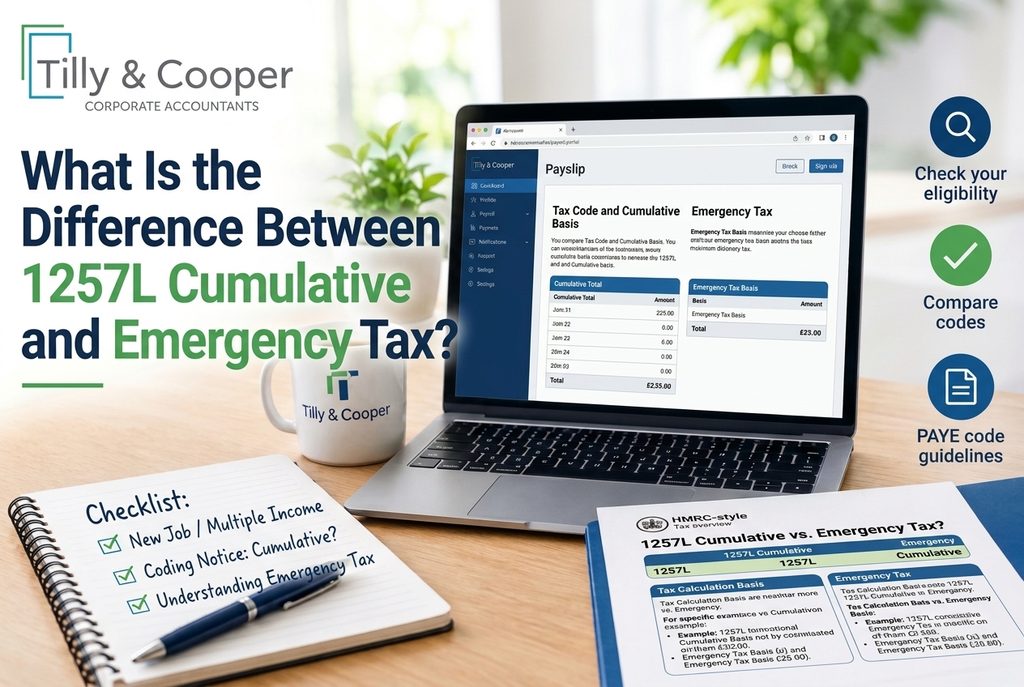
1257L cumulative calculates PAYE using earnings and tax deducted since the beginning of the tax year. Emergency codes calculate tax using the current pay period without correcting earlier periods.
What Does 1257L CUMUL Mean?
A payslip marked 1257L CUMUL or 1257L cumulative normally uses the tax-year-to-date calculation. For example, if an employee overpaid Income Tax earlier in the year and the employer has the necessary year-to-date records, a later cumulative calculation may correct that overpayment. The cumulative calculation depends on the payroll information available.
What Do W1, M1, X and NONCUM Mean?
W1, M1, X and NONCUM indicate that PAYE Income Tax is calculated on a non-cumulative basis. This means an employer calculates tax using the employee’s earnings and tax-free allowance for the current pay period, without taking account of earlier pay and Income Tax deductions in the tax year.
HMRC commonly uses these emergency tax-code indicators when an employee starts a new job without complete previous employment information or begins receiving a pension.
| Tax code indicator | Meaning | PAYE calculation |
| W1 (Week 1) | Weekly emergency tax basis | Uses the current week’s pay and allowance |
| M1 (Month 1) | Monthly emergency tax basis | Uses the current month’s pay and allowance |
| X | Emergency non-cumulative basis | Applies the relevant pay-period calculation without earlier tax-year figures |
| NONCUM | Non-cumulative payroll indicator | Describes the same non-cumulative calculation method |
| W1/M1 | Combined payroll notation | Week 1 or Month 1 basis, according to pay frequency |
Why Has HMRC Changed Your Tax Code From 1257L?
HMRC may change a code when it receives information that affects the allowance allocated to a particular employment or pension. Possible causes include taxable benefits, unpaid tax, untaxed income, a second job or changes in pension income. The new code number does not independently identify the reason for the adjustment. Your HMRC coding notice provides the individual calculation.
How Do 1157L, 1231L and Other Codes Compare?
Tax codes 1157L, 1231L, 1242L and 1263L represent different amounts of tax-free income allocated through PAYE. Compared with the standard 1257L code, a lower number generally means less tax-free income, while a higher number generally means more. For the 2026–27 tax year, the standard Personal Allowance is £12,570. HMRC may adjust an employee’s tax code to account for taxable benefits, untaxed income, unpaid tax or other allowances.
| Tax code | Approximate annual tax-free amount | Difference from 1257L |
| 1257L | £12,570 | Standard allowance |
| 1263L | £12,630 | £60 higher |
| 1255L | £12,550 | £20 lower |
| 1242L | £12,420 | £150 lower |
| 1231L | £12,310 | £260 lower |
| 1157L | £11,570 | £1,000 lower |
| 257L | £2,570 | £10,000 lower |
Why Would HMRC Change 1257L to 1157L?
A change from 1257L to 1157L normally reduces the tax-free amount allocated through PAYE by £1,000. For an employee paying 20% Income Tax on the affected income, this could increase annual Income Tax deductions by approximately £200. HMRC may adjust because of taxable employment benefits, untaxed income or an earlier tax underpayment.
What Does a Change From 1257L to 1231L Mean?
A change from 1257L to 1231L normally reduces the tax-free amount by £260. At a 20% marginal Income Tax rate, this could increase annual deductions by approximately £52. The code number does not identify the reason for the change. HMRC’s tax-code notice provides the underlying calculation.
Is 1263L Better Than 1257L?
Not necessarily. 1263L represents £60 more tax-free income than 1257L, but the correct code depends on your individual tax circumstances. A higher allowance does not automatically make a tax code more appropriate.
How Can You Check and Correct Your Tax Code?
You can check your code using HMRC’s Personal Tax Account, the HMRC app or the official tax-code explanation service.
Follow these steps:
- Find the tax code on your latest payslip or pension statement.
- Open HMRC’s Check your Income Tax service.
- Review the employment, pension and taxable-benefit information held by HMRC.
- Compare your available allowance with the coding calculation.
- Update incorrect information or contact HMRC where necessary.
- Check a subsequent payslip after a revised code is issued.
Can an Employer Change an Incorrect Code?
An employer must follow the applicable HMRC coding notice and permitted starter or tax-year procedures. If the payroll system uses a different code from the current HMRC instruction, the employer should investigate and correct its payroll record. If the HMRC calculation itself is wrong, the employee normally needs to update their details with HMRC. An accountant cannot independently authorise a new employee tax code.
Can a Wrong Tax Code Result in a Refund?
Yes. An employee may receive a refund when the Income Tax deducted exceeds the correct liability. HMRC may correct the amount through a later payroll calculation or reconcile the position after the end of the tax year. A refund is not guaranteed merely because an employee has a 1257L code.
For example, someone temporarily taxed under 1257L M1 may receive an adjustment when HMRC issues an appropriate cumulative code and the employer holds the necessary pay history. An underpayment can also occur if too little PAYE was deducted. HMRC may collect outstanding tax through a later code or another applicable method.
Frequently Asked Questions
A payslip can show 1257L and £0 Income Tax when the PAYE calculation produces no Income Tax deduction for that pay period. Future earnings may still be taxable. National Insurance and pension contributions are calculated separately.
No. The code normally provides the standard allowance. Taxable earnings above the allowance are subject to the relevant Income Tax rates.
No. Standard 1257L is normally cumulative. W1, M1, X or an equivalent NONCUM indication identifies emergency treatment.
HMRC may restore the standard code after removing an earlier adjustment, updating income information or resolving an underpayment. The coding notice identifies the change.
Yes. HMRC can use 1257L for a pension source when the standard allowance is allocated there. State Pension and other income may affect the final code.
The standard allowance is £12,570 throughout the UK, but S and C prefixes identify Scottish and Welsh Income Tax treatment. Scottish employment and pension tax bands differ from those in England and Northern Ireland.
Get PAYE Tax Code and Payroll Support From Tilly & Cooper
Incorrect employee tax codes can cause overpaid or underpaid PAYE Income Tax and inaccurate payroll records. Tilly & Cooper Corporate Accountants supports UK employers with payroll processing, HMRC-issued tax codes, National Insurance calculations, employee payslips and Real Time Information (RTI) submissions. Our payroll team can compare the codes recorded in payroll software with HMRC notices, investigate employer-side errors and apply authorized corrections.
HMRC remains responsible for calculating and changing an employee’s underlying tax code. Need help with PAYE deductions or employee payroll records? Visit our Payroll and PAYE Services page or contact Tilly & Cooper to discuss your company’s requirements.

