

CS01 Confirmation Statement: Filing, Fees & Deadline 2026
A CS01 is the confirmation statement UK companies use to confirm their Companies House information remains correct and up to date. Every company must normally file at least one confirmation statement every 12 months. This includes dormant and non-trading companies. The CS01 confirmation statement replaced the old annual return. It does not replace annual accounts or a Company Tax Return.
Companies usually have 14 days after their review period ends to file the statement. In 2026, the Companies House fee is £50 online or £110 by post. Companies must still file a CS01 when nothing has changed. Directors must also meet current Companies House identity verification requirements. Companies must provide directors’ personal codes through the confirmation statement where required. This explains the CS01 form, filing deadlines, fees, information requirements, and identity checks. It also covers late filing and company restoration.
What Is a CS01 Confirmation Statement?
A CS01 confirmation statement confirms that information held by Companies House about a company is correct. Companies House maintains information about registered UK companies. This includes company officers, shareholders, share capital, business activities, and people with significant control. Companies must review their information before filing the statement.
The company must confirm that the information held on the Companies House register is correct. Under UK company law, a confirmation statement must be filed even if no company details have changed during the review period. The company must also confirm that its intended future activities are lawful. This lawful purpose statement forms part of the confirmation statement requirements introduced through recent Companies House reforms.
What Does CS01 Mean?
CS01 is the Companies House form code for a company’s confirmation statement. Businesses often search for the document using terms such as:
- CS01 form
- Companies House CS01
- CS01 confirmation statement
- confirmation statement form
- CS01 filing
The paper version carries the CS01 reference. Companies can usually complete their confirmation statement electronically instead of submitting the paper form. The purpose remains the same under either filing method.
Is CS01 the Same as an Annual Return?
No. The CS01 confirmation statement replaced the Companies House annual return in 2016. Older companies may have previously filed form AR01. The confirmation statement works differently because businesses confirm their information rather than submitting the same complete dataset every year. However, companies still need to review their registered information carefully. The confirmation statement remains an annual compliance requirement for most companies.
Who Needs to File a CS01 Confirmation Statement?
Every registered company must normally file a confirmation statement at least once every 12 months. This requirement applies to active companies, dormant companies and companies that are not currently trading.
For example, a company cannot avoid the CS01 requirement simply because:
- it has no sales
- it has no employees
- it has stopped trading temporarily
- it is dormant
- no company information has changed
The confirmation statement and annual accounts are separate statutory filings. Companies should therefore monitor both deadlines independently.
Does a Dormant Company Need to File CS01?
Yes. A dormant company still needs to file a confirmation statement with Companies House. Dormant status affects accounting and tax obligations differently.It does not remove the Companies House confirmation statement requirement. A dormant company must review its registered information and file its CS01 when due. This applies even when the company has never traded.
Who Is Responsible for Filing CS01?
The company’s directors remain responsible for ensuring the confirmation statement is filed correctly and on time. An accountant, company secretary or professional agent can prepare and submit the filing. However, appointing an agent does not remove the directors’ underlying compliance responsibilities. Directors should ensure the information submitted to Companies House is complete and accurate.
When Is a CS01 Confirmation Statement Due?
A company must file at least one CS01 during every 12-month review period. Companies House allows up to 14 days after the review period ends to submit the confirmation statement. For a new company, the first review period normally starts on the incorporation date.It ends 12 months later. For an existing company, the next period starts after the previous confirmation statement date. You can check the company’s current confirmation statement date through the Companies House register.
What Is the CS01 Review Period?
The review period is the period covered by a company’s confirmation statement. It normally lasts 12 months. For example, assume a company’s confirmation statement date is 10 September 2026. Its next review period will normally run until 10 September 2027. The company then gets the statutory filing period to submit its confirmation statement. Filing early can change the next review period.
What Is the CS01 Confirmation Date?
The confirmation date is the date on which the company confirms its registered information is correct. It marks the end of the relevant review period. Companies should not confuse the confirmation date with the filing date. The confirmation date relates to the information being confirmed. The filing date records when Companies House actually receives the CS01.
Can You File a CS01 Early?
Yes. A company can file its confirmation statement before its current review period ends. Filing early starts a new review period from the following day. This can help a company align its compliance dates. However, directors should understand the effect before changing the confirmation date.
What Information Do You Need to Check Before Filing CS01?
Companies should review their registered details, officers, shareholders, PSC information, SIC codes, and share capital before filing CS01. Companies House expects the company to confirm that its information remains accurate. Do not treat CS01 as a simple annual payment. The filing confirms important legal information about the company.
Do You Need to Check Directors and Company Officers?
Yes. Check the details of directors, secretaries, and other relevant company officers before filing. Review names, service addresses, and other registered information. Incorrect officer details may need a separate Companies House filing. The CS01 should then confirm the register after those updates.
Do You Need to Check People With Significant Control?
Yes. Companies should review their people with significant control information before filing CS01. A PSC may include an individual who controls significant shares or voting rights. Different conditions can create PSC status. Changes to PSC information generally need to be reported through the relevant PSC filing process. Do not wait for the annual confirmation statement to report changes that require earlier notification.
Do You Need to Check the Registered Office and Email Address?
Yes. Check the company’s registered office and registered email information before filing the confirmation statement. A registered office change requires a separate filing. Companies House also requires companies to maintain an appropriate registered email address. The email address does not appear on the public register. Companies House uses it to communicate with the company.
Do You Need to Check the SIC Code?
Yes. The SIC code should correctly describe the company’s principal business activities. SIC means Standard Industrial Classification. A company can use one or more appropriate SIC codes. For example, a business may need to update its code after changing its main activity. Companies can update SIC information through their confirmation statement.
Do You Need to Check Shareholders and Statement of Capital?
Yes. Companies with shares should review their shareholder information and statement of capital before filing CS01. The statement of capital records important information about issued shares.
It can include:
- total number of shares
- share classes
- nominal values
- amounts paid and unpaid
- rights attached to each share class
Companies should also check shareholder details against their statutory records. Incorrect share information can create wider company secretarial problems.
What Information Can You Change on a CS01?
CS01 can update certain information, but several company changes require separate Companies House forms.Companies House allows the confirmation statement to report changes to:
- SIC codes
- statement of capital
- trading status of shares
- certain PSC exemption information
- shareholder information
Other company changes must normally be reported separately.
Can You Change a SIC Code on CS01?
Yes. A company can update its SIC code through the confirmation statement.
Use a code that accurately describes the company’s current activity. A business can have several SIC codes where multiple activities apply. However, unnecessary codes can make the public company profile less clear.
Can You Change Shareholder Information on CS01?
Yes. CS01 can include updates to shareholder information where the confirmation statement process permits them.
Companies should ensure their shareholder records agree with their statutory registers. Share transfers or share issues can involve separate documents and legal steps. The CS01 records relevant company information but does not replace those underlying procedures.
Can You Change the Statement of Capital on CS01?
Yes. Companies can update relevant statement of capital information through CS01.
However, the confirmation statement does not replace forms required for specific share transactions. For example, issuing new shares can require a separate allotment filing. The company should complete the underlying transaction correctly before confirming its capital position.
What Changes Must Be Filed Separately From CS01?
Changes to directors, registered offices, PSC details and registered email addresses normally require separate filings. The current paper CS01 specifically identifies several changes that must be filed separately.
These include:
- registered office changes
- SAIL address changes
- officer appointments and changes
- PSC information
- registered email address changes
Companies should make those updates before, or alongside, the confirmation statement where required.
Do Directors Need Identity Verification Before Filing CS01?
Yes. Current directors must meet Companies House identity verification requirements linked to the confirmation statement process. Mandatory identity verification forms part of the Economic Crime and Corporate Transparency Act reforms. Each verified person receives a unique Companies House personal code. Directors need to provide their personal codes for each company where they hold a directorship. Companies should complete this step before their CS01 filing becomes due. Missing director verification information can prevent the company from completing the filing correctly.
What Is a Companies House Personal Code?
A Companies House personal code links a verified identity to a person’s Companies House roles. The code belongs to the individual rather than the company. A director with appointments at several companies uses the same personal code. However, the director must connect that verified identity to each relevant company role. The personal code should be kept securely.
Does Every Director Need a Personal Code for CS01?
Current directors generally need their Companies House personal codes linked through the confirmation statement process.This includes directors of existing companies during the current identity verification transition. Companies House states that directors must provide their personal code as part of their company’s next confirmation statement. A company with several directors should therefore obtain the required information for each director.
How Do You File a CS01 Confirmation Statement Online?
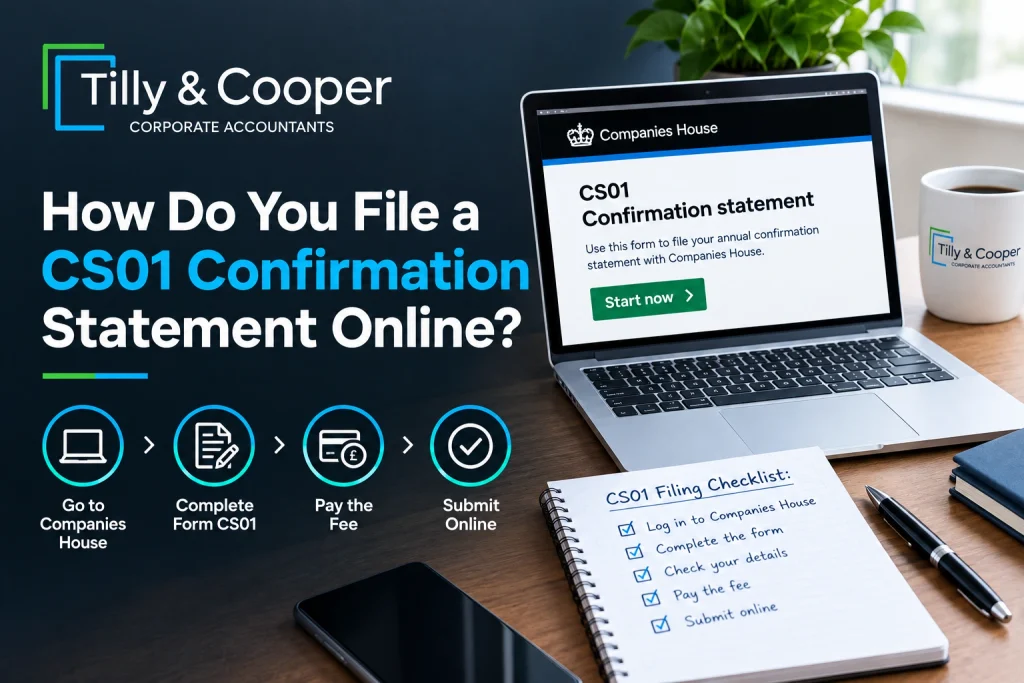
You can file CS01 online through Companies House after reviewing and updating the company’s registered information. The online process is normally faster and cheaper than filing a paper form.
A typical process involves:
- Check the company information on the Companies House register.
- Update information that requires separate forms.
- Confirm shareholder and capital information.
- Check the company’s SIC codes.
- Complete director identity verification requirements.
- Confirm the company’s intended future activities are lawful.
- Submit the confirmation statement.
- Pay the required Companies House fee.
The online filing fee is currently £50.
What Do You Need Before Filing CS01 Online?
You normally need the company number, authentication code, and the required Companies House account details. Director personal codes may also be required. The exact online service depends on the company’s circumstances. Some companies can use the newer Companies House confirmation statement service. Others need to use WebFiling. The main service requires the company’s authentication code and relevant account access.
Can an Accountant File CS01 for a Company?
Yes. An accountant or authorised agent can help prepare and file a company’s confirmation statement.
This can be useful where:
- share information changed
- PSC information needs reviewing
- identity verification is incomplete
- the company has missed previous filings
- restoration is required
- directors are based overseas
Professional support can also help identify changes that require separate Companies House forms.
How Much Does It Cost to File CS01?
The Companies House CS01 fee is £50 online or £110 for a paper filing in 2026. Companies House increased the digital confirmation statement fee to £50 from 1 February 2026. The paper filing fee is £110. Professional fees charged by accountants or company secretarial providers are separate.
What Is the CS01 Online Filing Fee?
The current Companies House online confirmation statement fee is £50. This is an official Companies House fee. It does not include professional assistance. Online filing is normally cheaper than paper submission.
How Much Does a Paper CS01 Cost?
A paper CS01 currently costs £110 to file with Companies House. The company must use the correct form version. Paper applications also take longer to process than online filings. Company restoration cases can require paper confirmation statements.
Do You Pay the CS01 Fee Every Time You File?
No. Companies normally pay the confirmation statement fee once during each 12-month payment period.
The payment period differs from the review period. A company can file additional confirmation statements within the same payment period without another annual fee. A new fee becomes due when the next payment period begins. This distinction matters when a company files early.
What Happens If a CS01 Is Filed Late?
Late CS01 filing can lead to financial penalties and possible strike-off action.
Companies House states that a company can face a financial penalty of up to £5,000. The company may also be struck off the register for failing to file its confirmation statement.
Directors should therefore act quickly when a confirmation statement becomes overdue. A first Gazette notice can create additional risks for the company. These may affect banking relationships, contracts, assets and normal business operations.
Is There a Penalty for a Late Confirmation Statement?
Yes. Companies House can impose a financial penalty for failing to file a confirmation statement on time. Current guidance states that the penalty can reach £5,000. This is separate from consequences linked to strike-off. Directors should not ignore an overdue CS01 simply because no company information changed.
Can a Company Be Struck Off for Not Filing CS01?
Yes. Companies House can begin compulsory strike-off action when a company fails to meet filing requirements. Failure to submit confirmation statements can indicate that the company is not complying with its statutory duties. Companies House may then start the strike-off process. Directors should deal with overdue filings before the company reaches dissolution.
What Should You Do If Your CS01 Contains Incorrect Information?
Correct the underlying Companies House information and submit the appropriate filing when a CS01 contains an error. The correct process depends on what information is wrong. For example, shareholder or capital information may require a replacement or corrected confirmation statement.
A wrong registered office may require a separate address filing. Incorrect PSC information requires the relevant PSC form. Do not submit another CS01 without first identifying the original error. The public register should ultimately match the company’s legal records.
What Is the Difference Between CS01 and Annual Accounts?
CS01 confirms company information, while annual accounts report the company’s financial position and performance. They are separate Companies House requirements.
A simple comparison helps explain the difference:
| Requirement | CS01 | Annual Accounts |
| Main purpose | Confirm company details | Report financial information |
| Filed with | Companies House | Companies House |
| Typical frequency | At least every 12 months | Usually annually |
| Includes financial statements | No | Yes |
| Includes shareholder information | Can do | Usually not as its main purpose |
| Required for dormant companies | Yes | Yes, subject to dormant account rules |
Filing annual accounts does not satisfy the CS01 requirement. Filing CS01 does not replace annual accounts.
Is CS01 the Same as a Company Tax Return?
No. CS01 is a Companies House filing, while a Company Tax Return is an HMRC filing. Companies use CS01 to confirm statutory company information. A Company Tax Return normally reports Corporation Tax information to HMRC. The deadlines and purposes are different. A company can therefore have Companies House filings and HMRC filings due within the same year.
How Does CS01 Work During Company Restoration?
A company being restored to the register may need to file overdue paper CS01 confirmation statements. This is an important difference from normal online filing. Companies House states that a company restoration requires the confirmation date that was due before the company was struck off. Companies House advises applicants to contact it when the correct date is uncertain. Restoration can involve several outstanding requirements.
These can include:
- CS01 confirmation statements
- overdue annual accounts
- restoration forms
- registered office corrections
- director information
- PSC information
- identity verification
- Companies House fees
The exact documents depend on the company’s history. For example, a company dissolved after missing several filing periods may have more than one outstanding obligation.
Directors should review the full Companies House filing history before preparing the restoration package. This avoids filing the wrong confirmation dates or missing required documents. Tilly & Cooper can assist with reviewing the company record and preparing restoration-related compliance filings.
What Are the Most Common CS01 Questions?
The most common CS01 questions concern annual filing, company changes, authentication codes, and Companies House records.
Can You File CS01 With No Changes?
Yes. A company must still file CS01 when none of its registered information has changed. The confirmation statement confirms that the existing information remains correct. “No changes” does not remove the filing requirement.
Can You File More Than One CS01 in a Year?
Yes. A company can file more than one confirmation statement during a 12-month period.
A company may file early where its circumstances make this useful. The filing can create a new review period. However, the annual fee normally applies once within each payment period.
Can You File CS01 Without an Authentication Code?
The standard online filing process normally requires the company’s Companies House authentication code. A company without its code may need to request a replacement. The code is different from a director’s identity verification personal code. Keep both concepts separate. The authentication code relates to company filing access. The personal code proves an individual’s verified identity.
Is a CS01 Required Every Year?
Yes. Every company must normally file at least one confirmation statement during each 12-month review period.This includes companies with no changes. It also includes dormant and non-trading companies.
Does CS01 Show on Companies House?
Yes. A filed confirmation statement appears in the company’s public Companies House filing history.The filing record normally shows the confirmation statement date. It also indicates whether the statement included updates. Some information submitted to Companies House becomes available through the public register.
What Should Companies Remember About CS01?
CS01 is an important annual Companies House filing that confirms a company’s registered information remains correct.Companies must normally submit at least one confirmation statement every 12 months. The filing deadline is 14 days after the review period ends. The current Companies House fee is £50 online or £110 by post.Companies should review directors, PSCs, shareholders, SIC codes and share capital before filing. Current directors must also meet Companies House identity verification requirements.
A CS01 remains necessary when nothing has changed and when the company is dormant. Late filing can result in financial penalties and compulsory strike-off action. Company restoration can create additional CS01 requirements, including specific historic confirmation dates. Keeping the company’s records accurate throughout the year makes the annual filing much easier. Tilly & Cooper can support companies with CS01 filing, Companies House compliance, and company restoration requirements.
Need Help Filing Your CS01 Confirmation Statement?
Tilly & Cooper can help you review your Companies House records, prepare your CS01, and deal with any overdue or incorrect information.