

How to Recover Money From a Dissolved Company Bank Account
You can recover money from a dissolved company bank account by restoring the company and requesting repayment from the institution holding its funds. The correct procedure depends on whether the bank still holds the balance or has transferred it to the Crown.
Dissolution generally freezes or closes a company’s business bank account. Under Section 1012 of the Companies Act 2006, its remaining property and rights pass to the Crown as Bona Vacantia, subject to existing legal rights.
If the bank retains the funds, the restored company can request their release. If the Bona Vacantia Division (BVD) has received the money, an eligible applicant can use Form RA15. This guide covers UK bank accounts, restoration costs and funds held by Wise, Stripe and PayPal.
What Happens to a Bank Account When a Company Is Dissolved?
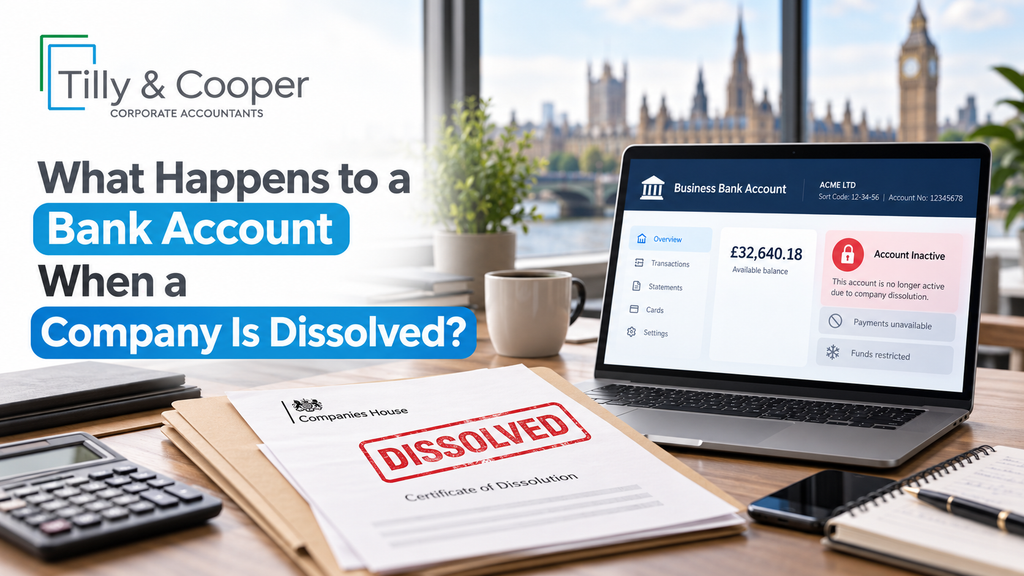
A dissolved company’s business bank account is generally frozen or closed because the company no longer exists as a legal entity. A bank balance normally represents money the bank owes its account holder. When the company dissolves, its right to that money can pass to the Crown.
The bank may discover the dissolution several days later. That delay does not change the legal date of dissolution. Former directors also lose their ordinary authority to operate the account. For example, a company has £12,000 in its business account when Companies House dissolves it.
The bank identifies the dissolution and blocks withdrawals. The former director cannot transfer that balance into a personal account merely because they previously controlled the company. The relevant rights remain subject to Bona Vacantia law, the bank’s contractual position and any existing third-party claims.
Can a former director withdraw money after dissolution?
No. A former director has no automatic right to withdraw a dissolved company’s money. Previous access to online banking does not establish legal ownership. The director should establish whether the bank still holds the balance and whether company restoration is necessary.
Does the Bank Keep the Money?
A bank can retain a dissolved company’s balance temporarily without becoming its owner. Banks may close affected accounts and transfer qualifying funds to the appropriate Crown representative. A closed bank account does not prove the Crown has received the money.
How can you find out where the money is held?
Contact the bank’s business account team and provide the company registration number. Request written confirmation of the account’s closing balance and whether a Crown transfer occurred. If the bank transferred the money, ask for the transfer date, amount and receiving authority. This establishes whether the next step involves the bank or a Crown repayment procedure.
Which route should you use to recover the money?
To recover money from a dissolved company, first identify who holds the funds. Contact the bank, payment provider or relevant Crown authority to confirm the balance and release requirements. Company restoration may be necessary, while some small balances held by BVD may qualify for a discretionary grant. The table below helps you identify your first action and potential recovery route.
| Current situation | First action | Recovery route |
| Bank still holds the funds | Confirm closing balance | Restore the company and request release |
| BVD has received the funds | Confirm Crown referral | Restore the company and apply using RA15 |
| Another Crown authority holds the money | Identify the relevant jurisdiction | Follow that authority’s repayment procedure |
| Wise Business account closed | Confirm available balance | Request Wise’s refund and verification requirements |
| Stripe payouts suspended | Check available, pending and reserved amounts | Resolve payout restrictions |
| PayPal Business account limited | Check holds, reserves and disputes | Follow Resolution Centre instructions |
| Small balance held by BVD | Check DG2 eligibility | Consider a discretionary grant without restoration |
The institution currently holding the funds determines whom to contact first.
Has the Money Passed to the Crown?
A qualifying bank balance generally passes to the Crown as Bona Vacantia when the company dissolves. However, legal entitlement and the physical transfer of money are different. For example, Companies House dissolves a company on 15 March. Its bank identifies the dissolution on 28 March and freezes the account.
The bank might still hold the money on 28 March, even though dissolution occurred earlier. The Government Legal Department handles qualifying Crown-held cash through its Bona Vacantia Division. Other authorities handle assets in Scotland, Northern Ireland and certain parts of England.
Do You Need to Restore the Company?
Restoration is normally the main route for recovering a substantial balance belonging to a dissolved company. The appropriate procedure depends on how the company was struck off.
Administrative restoration
Administrative restoration is available to qualifying former directors and members after specified Registrar-initiated strike-offs.For the ordinary route under Sections 1000 and 1001 of the Companies Act 2006, the principal requirements include:
- The applicant was a director or member when the company was struck off or dissolved.
- The company was carrying on business or in operation when the registrar struck it off.
- The application is made within six years of dissolution.
- Required statutory filings, fees and applicable penalties are addressed.
Applicants submit Form RT01 for administrative restoration. Companies House charges £341 for RT01 applications as of October 2026. A further consent requirement applies where the company’s property or rights became Bona Vacantia. Companies House requires a written statement from the appropriate Crown representative consenting to restoration.
The Government Legal Department’s BVC14 procedure applies to qualifying cases within the Treasury Solicitor’s jurisdiction. Its waiver application costs £64. Where the company had no assets or rights, applicants should confirm the relevant consent requirements before filing RT01.
What about exceptional administrative restoration cases?
Different conditions apply to certain companies struck off under Section 1002A or Regulation 22 of the Registered Office Address (Rectification of Register) Regulations 2024. Section 1002A applicants must provide evidence that the registrar lacked reasonable cause for the relevant belief.Regulation 22 applicants must submit an address-change notice and evidence of their right to use the proposed registered office. The ordinary trading requirement does not automatically govern these alternative routes.
Court restoration
Court restoration is generally required where administrative restoration is unavailable. For example, directors who voluntarily dissolved their company using DS01 cannot use the ordinary RT01 procedure.
Eligible applicants may include former directors, members, creditors and people with qualifying legal claims. Court restoration generally has a six-year application limit, although statutory exceptions apply.Applicants may also need to address the Crown representative’s position and court-related costs. GOV.UK
How Much Does It Cost to Recover a Dissolved Company’s Bank Balance?
Administrative restoration costs £341 in Companies House application fees. A qualifying Treasury Solicitor waiver adds £64.These two official charges total £405 where both apply.
| Charge | Amount | Explanation |
| Companies House RT01 application | £341 | Administrative restoration |
| Treasury Solicitor BVC14 waiver | £64 | Qualifying Crown consent procedure |
| Combined application charges | £405 | Only where both charges apply |
| Outstanding company documents | Varies | Depends on overdue filings |
| Existing late filing penalties | Varies | Depends on the company’s filing history |
| Professional assistance | Varies | Depends on the work undertaken |
| RA15 repayment application | £0 | No BVD application fee |
The £405 figure is not a complete restoration quotation. The company may still owe filing fees, penalties or other amounts. The Crown may also have incurred recoverable costs. The £64 waiver charge does not apply universally across every UK Crown jurisdiction.
Is recovering £500 financially worthwhile?
Consider a company with £500 remaining in its bank account. It qualifies for administrative restoration and requires a Treasury Solicitor waiver. The two application charges total £405, leaving a difference of £95 before any other costs. Outstanding accounts, penalties or professional fees could make the recovery more expensive than the bank balance.The director should therefore check the company’s other assets, debts and filing obligations before applying. A company’s remaining liabilities do not disappear simply because restoration is intended to recover money.
How Do You Recover Funds After Restoration?
To recover money after restoration, provide the bank with proof that Companies House has reinstated the company. The bank may then review the account and arrange payment after completing its verification checks.
Step 1: Obtain restoration confirmation
Keep the Companies House RT01 confirmation letter or the relevant court restoration order. Check that Companies House has updated the company’s register entry.
Step 2: Contact the bank
Tell the bank that the company has been restored. Ask for the remaining balance and the documents required for release. Confirm that the funds have not already been transferred to the Crown.
Step 3: Complete verification
The bank may request identification for directors, company details and evidence of authorised control. Submit the documents through its approved channel.
Step 4: Arrange repayment
Ask whether the original account can be reopened or whether the bank will transfer the funds. Where the original account remains closed, the bank may require another verified account belonging to the restored company.BVD has a separate arrangement for authorised third-party repayments. A bank is not automatically required to follow that procedure.
Step 5: Record the repayment
Compare the recovered amount with the company’s historic bank statements. Investigate differences and record the transaction in the company’s accounts.
Example: Recovering £8,000
A company is dissolved with £8,000 in its bank account. The bank confirms that it still holds the balance. The former director completes administrative restoration and sends the confirmation to the bank.
After verification, the bank releases the available funds to a company account. This example assumes no outstanding account restrictions or competing legal claims.
What If the Money Was Sent to Bona Vacantia?
A restored company can apply using Form RA15, where the Bona Vacantia Division has received its cash assets. The Government Legal Department accepts RA15 applications for qualifying company funds within its jurisdiction. The company must already be restored, and a third party must have referred the money to BVD.
Who can apply using Form RA15?
The Government Legal Department permits eligible company directors, secretaries, creditors, insolvency practitioners and liquidators to apply. The application requires the relevant restoration documents and bank details. There is no RA15 application fee or standard deduction.
Can BVD repay money to a third party?
Yes. BVD permits an authorised third-party repayment when the required documents are supplied. For example, the applicant may request repayment to an account other than the restored company’s account. In that situation, BVD requires a Payment Authority form and the applicable identity evidence. A bank retaining company money may have different repayment requirements.
What identification documents does BVD require?
Bona Vacantia Division (BVD) identification requirements for RA15 repayments depend on the repayment amount and receiving account. Payments below £10,000 to the company generally require no identity documents. Third-party payments require certified identification and payment authority. Repayments above £10,000 trigger anti-money laundering checks. For exactly £10,000, confirm the applicable requirements directly with BVD before submitting your application to avoid processing delays.
| Repayment | Requirements |
| Below £10,000, paid to the company | Identity documents are generally not required |
| Below £10,000, paid to a third party | Certified identification and payment authority requirements apply |
| Exactly £10,000 | Confirm the applicable category directly with BVD |
| Above £10,000 | Anti-money laundering checks apply automatically |
For repayments above £10,000, identity checks cover the RA15 signatory, the majority of company officers and shareholders holding at least 25% of the shares. The published guidance refers separately to amounts below and above £10,000. It does not explicitly classify a repayment of exactly £10,000. BVD aims to process complete and correct RA15 applications within 20 working days. This period begins after receipt of a complete application, not when the company starts restoration.
Example: Recovering £18,000 from BVD
A company is dissolved with £18,000 in its bank account. The bank transfers the money to the Bona Vacantia Division. After restoration, an eligible director completes Form RA15 and supplies the restoration confirmation, receiving bank statement and required identification documents. If BVD approves the application and holds the full amount, it can repay the £18,000 without an RA15 fee deduction.
Can You Recover Company Money Without Restoration?
Yes. The Government Legal Department operates a discretionary grant scheme for qualifying Crown-held money. Its DG2 procedure allows eligible applicants to seek up to £3,000 without restoring the company. However, a former director cannot qualify merely by having held that office.
Eligible applicants include former shareholders, liquidators, administrators and company voluntary arrangement supervisors. For former shareholders, all shareholders must participate and the company must have no existing creditors. The scheme also requires applicants to undertake not to restore the company in future.BVD must already have received the funds. Only one DG2 payment is available per dissolved company. No applicant has an automatic entitlement to a grant. GOV.UK
What deductions apply to DG2?
The Government Legal Department deducts £300 for administration. No grant is available where BVD holds £300 or less. An additional 5% reservation deduction applies when the balance remaining after administration exceeds £750.
For example:
| Calculation | Amount |
| Crown-held cash | £2,300 |
| Administrative deduction | −£300 |
| Remaining balance | £2,000 |
| Reservation deduction of 5% | −£100 |
| Illustrative payment | £1,900 |
This calculation assumes BVD approves the application. The DG2 scheme differs from the discretionary procedure for companies that cannot be restored, which has separate eligibility conditions.
How Can You Recover Wise, Stripe or PayPal Funds?
A restored company can request the release of qualifying funds held by Wise, Stripe or PayPal, subject to each provider’s rules. These services should not all be treated as conventional banks. A Wise balance, unsettled Stripe payout, and PayPal reserve can represent different legal and contractual arrangements. Restoration confirms the company’s legal existence. It does not automatically remove a payment hold or resolve a dispute.
How can you recover money from a closed Wise Business account?
Contact Wise and request its refund procedure for the restored business. Wise’s published closure guidance explains that it works to return remaining account money after completing regulatory security checks. Where an account has already been deactivated, Wise may require external bank details and a refund request.
Wise may also request further verification before making the payment. Its public guidance does not establish a guaranteed repayment period specifically for dissolved companies. Provide the restoration confirmation and ask Wise to identify any outstanding requirements.
How can you recover Stripe funds after restoration?
Start by checking whether Stripe classifies the balance as available, pending or reserved. These categories determine whether money is eligible for payout. An available balance may still have a payout restriction, such as incomplete identity verification. Pending payments have not necessarily reached their normal payout stage. Reserved money may remain unavailable because of disputes, refunds, or other transaction risks. Contact Stripe or the connected platform responsible for the payouts.Request confirmation of the amount available, the restrictions, and the documents needed to resolve them. A restored company’s Companies House confirmation may help establish its current legal status, but it does not override contractual reserves.
Can PayPal release money after company restoration?
PayPal can review a restored company’s request to access its business balance. However, PayPal’s UK user agreement permits account limitations, payment holds and reserves in specified circumstances.
For example, money may remain held where PayPal identifies unresolved chargeback exposure or transaction risk. Check the PayPal Resolution Centre for the reason behind the restriction.
Complete the required verification and request confirmation of the amount available for withdrawal. PayPal distinguishes accessible balances from money held in its reserve account.
How do payment-provider restrictions compare?
| Provider | Fund status | Appropriate action |
| Wise | Balance remaining after account closure | Request refund review and complete security checks |
| Stripe | Available balance, payouts suspended | Resolve the stated payout restriction |
| Stripe | Pending funds | Check settlement status |
| Stripe | Reserved funds | Check reserve conditions and release eligibility |
| PayPal | Limited business account | Follow Resolution Centre requirements |
| PayPal | Held or reserved funds | Address the hold or reserve conditions |
The displayed account balance should not be treated as the amount immediately available for withdrawal.
What Evidence Might the Bank or Payment Provider Need?
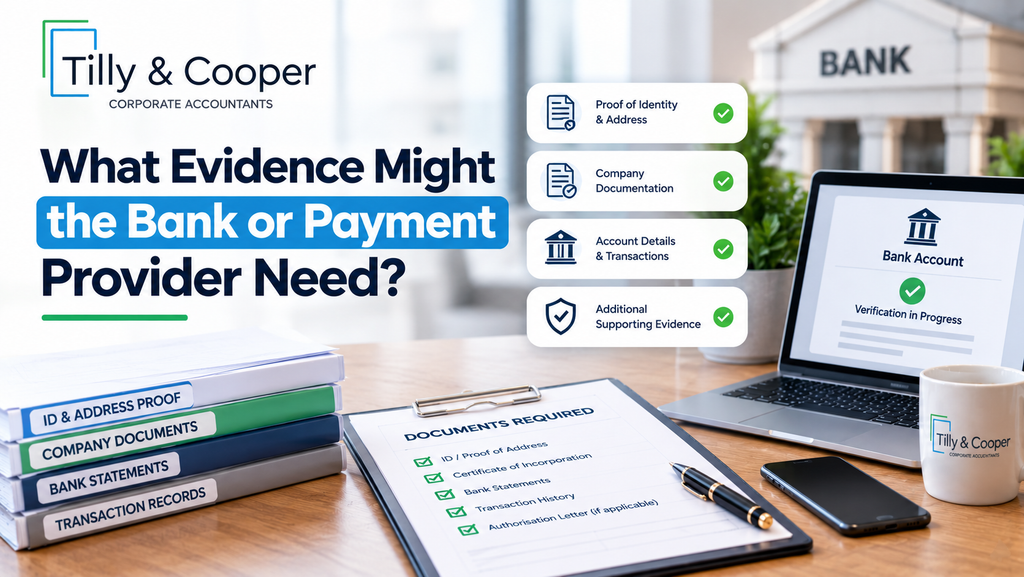
A bank or payment provider may request proof of restoration, company ownership and the applicant’s authority. Ask the institution for its document requirements before sending sensitive records.
| Evidence | Purpose |
| Company registration number | Identifies the business |
| Companies House RT01 confirmation | Establishes administrative restoration |
| Court restoration order | Establishes court restoration |
| Director identification | Verifies the applicant |
| Historic statements | Supports the account balance |
| Current company bank details | Identifies a repayment destination |
| Shareholder or beneficial owner details | Supports ownership verification |
| Wise, Stripe or PayPal records | Identifies held payments and outstanding balances |
What if the bank has already closed the account?
A closed account does not necessarily mean the Crown has received the balance. Ask for the final statement and written confirmation of any transfer to a Crown representative. Where the bank still holds the money, the restored company should request repayment through the bank. Where BVD has received it, the eligible applicant should follow RA15.
What if the bank refuses to release the funds?
Ask the bank to explain its decision in writing. Identify whether the problem concerns restoration evidence, identity verification, the receiving account, or disputed legal entitlement. Supply missing documentation through the bank’s official process. If the disagreement continues, use the bank’s complaints procedure.
Eligible complainants may refer unresolved complaints to the Financial Ombudsman Service under the applicable rules. Legal advice may be appropriate where creditors, ownership disputes or court proceedings affect the company’s entitlement.
FAQs
A bank cannot release company funds solely because someone was previously a director. The restored company must establish its legal entitlement. The bank may also request proof of restoration, identification and evidence of the applicant’s authority.
Yes, company restoration is normally required to recover money held in a dissolved company’s bank account. However, eligible former shareholders may qualify for a discretionary grant without restoration where the Bona Vacantia Division already holds the funds.
Yes, recovering company funds may be possible even when the company has outstanding debts. However, restoration does not cancel existing liabilities. The recovered money belongs to the company, and creditors retain their legal rights.
Restore the company through Companies House or the appropriate court procedure. Then submit Form RA15 if the Bona Vacantia Division has received the funds. Include proof of restoration, the required bank details and supporting documents.
Not necessarily. The bank decides whether to reactivate the original account. If it remains closed, the bank may arrange repayment to another verified account belonging to the restored company.
Yes, recovery may be possible after restoration, depending on the provider’s account restrictions. Wise may require refund verification, while Stripe and PayPal may need to resolve payout holds, reserves or outstanding disputes before releasing funds.
There is no fixed timeframe for the complete recovery process. The duration depends on company restoration, the location of the funds and verification requirements. The Bona Vacantia Division aims to process complete Form RA15 applications within 20 working days, excluding restoration time.
Conclusion
To recover money from a dissolved company bank account, first establish whether the bank or the Crown holds the balance. Restoration normally provides the route to reclaiming company-owned funds. A qualifying discretionary grant may offer an alternative in limited circumstances.
Banks, Wise, Stripe and PayPal follow different account and payout procedures. Restoring the company does not automatically remove every restriction. Before paying application fees, obtain the closing balance, confirm where the money is held and check the company’s restoration eligibility.

